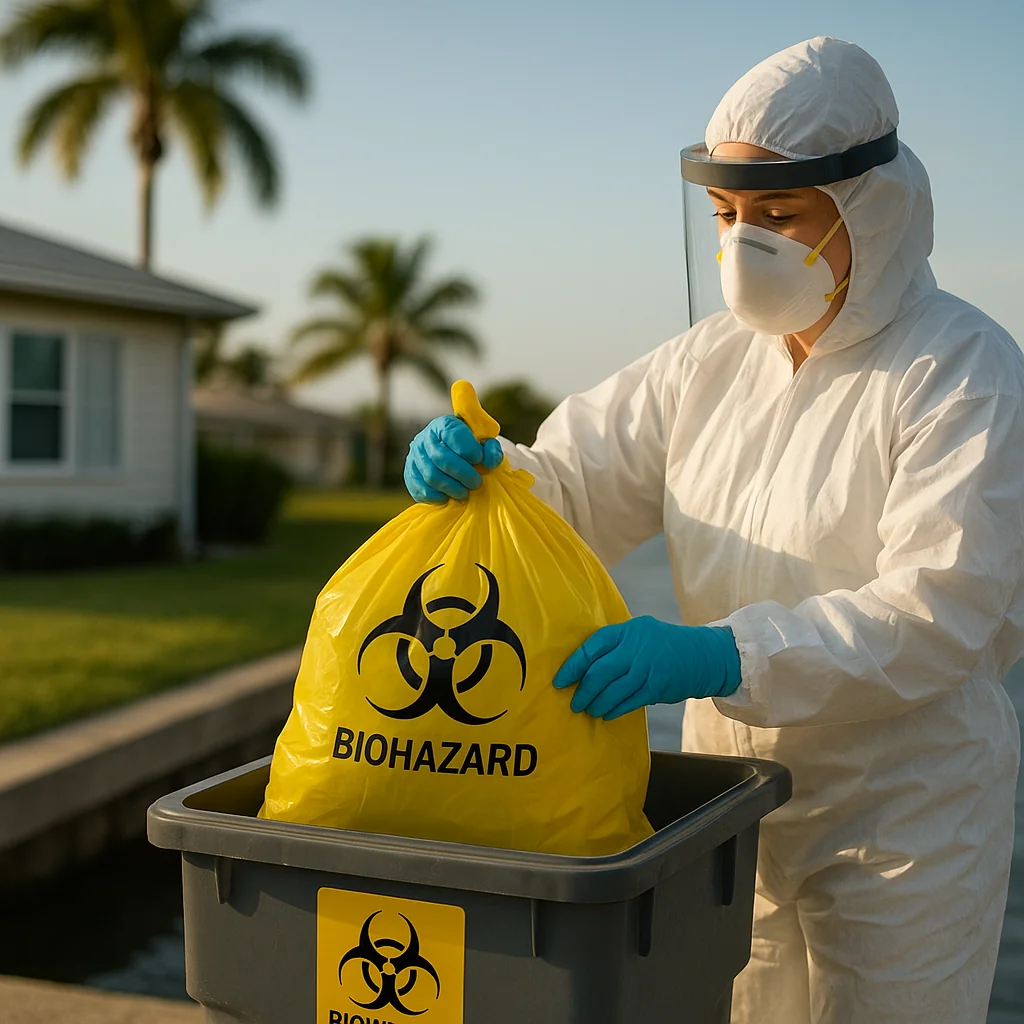
Biohazard cleanup involves the safe removal, decontamination, and disposal of dangerous biological materials such as blood, bodily fluids, bacteria, viruses, and other pathogens from contaminated sites. In Cape Coral, this service is crucial after incidents like unattended deaths, accidents, or sewage overflows, especially given our area’s proneness to hurricanes and high humidity that accelerate bacterial growth. Professionals use specialized equipment to eliminate health risks that regular cleaning can’t touch.
For Cape Coral homeowners, understanding biohazard cleanup means knowing how to protect your family and property from invisible threats that can linger in our older canal-front homes or flood-prone yards. I’ve handled hundreds of these jobs here, from NE Cape Coral condos to waterfront properties, and the stakes are high because improper handling spreads contaminants through our porous limestone soil and into groundwater.
Common Causes of Biohazards in Cape Coral Homes
Biohazards don’t just appear; they stem from specific events amplified by our local environment. Unattended deaths top the list—in a city with many retirees living alone in single-story ranch homes, a person can pass unnoticed for days, leading to decomposition fluids seeping into tile grout or carpet padding. Trauma scenes from accidents or assaults follow, often in garages or kitchens where blood pools on concrete floors.
Sewage backups are a huge issue here due to our canal system and heavy summer rains. When lines clog from palm fronds or coral roots, sewage backup cleanup becomes urgent because it carries fecal coliforms and hepatitis. Animal hoarding or rodent infestations thrive in our attics during cooler months, dropping urine and feces that aerosolize in AC vents. Finally, medical waste from home health care—needles, soiled dressings—piles up if not disposed of properly.
Local Factors That Worsen These Causes
- Hurricanes and flooding: Post-Ian, we saw spiked calls from Four Mile Cove area homes where storm surge mixed saltwater with decaying organic matter, breeding vibrio bacteria.
- High humidity (80-90% year-round): Speeds decomposition by 2-3 times compared to drier climates.
- Aging plumbing: Many 1970s-80s homes have cast-iron pipes that corrode, leading to frequent backups.
Warning Signs of a Biohazard Situation
Don’t wait for odors; early signs save thousands in remediation. Persistent foul smells that bleach or Febreze can’t mask signal decomposition gases like cadaverine. Discoloration on walls, ceilings, or floors—rusty stains from blood or black mold from sewage—are red flags. Insects like flies or maggots clustering unusually point to a body or waste source.
Health symptoms in household members matter too: unexplained respiratory issues, nausea, or skin rashes after exposure. In Cape Coral’s Central Cape Coral rentals, tenants report sticky residues on surfaces that don’t wipe off, often from fluid migration under baseboards.
| Sign | Severity Level | Action Needed |
|---|---|---|
| Faint odor, no visible stains | Low | Monitor, ventilate |
| Visible fluids, insect activity | Medium | Evacuate, call pro |
| Health effects, structural damage | High | Immediate pro intervention |
What to Do Right Now If You Suspect a Biohazard
Stay safe first: do not enter the area without PPE like gloves, N95 mask, and goggles—available at any hardware store. Keep pets and kids away, and ventilate by opening windows if safe, but avoid fans that spread aerosols. Document with photos from a distance for insurance, noting date, time, and location.
- Cordon off the space with tape or furniture.
- Turn off HVAC to prevent spore spread through ducts.
- Contact authorities if it’s a potential crime scene or unattended death—Cape Coral PD will guide next steps.
- Avoid DIY beyond containment; bleach dilutes pathogens but doesn’t kill spores embedded in drywall.
Honest talk: small blood spills (under a cup) from a cut can be DIY with 10% bleach solution after gloves, but anything involving death, feces, or unknown sources requires pros due to legal disposal regs.
How Professionals Handle Biohazard Cleanup Step by Step
We start with assessment: entering in full Tyvek suits, respirators, and booties, using ATP meters to detect organic residue and moisture meters for hidden saturation. Containment follows—sealing rooms with 6-mil plastic sheeting and negative air machines pulling 500 CFM to filter HEPA out 99.97% of particles.
Removal uses bio-solvents and enzymatic cleaners that break down proteins at a molecular level, not just surface wipe. We scrape, extract with truck-mounted vacuums (100 gallons/min), and discard porous materials like carpets whole—no rinsing that spreads germs. Disinfection hits with EPA-registered hospital-grade disinfectants effective against HIV, hepatitis C, and MRSA, applied via foggers for 360 coverage. Finally, deodorization targets sources; for stubborn smells, we use odor removal techniques like ozone generators or hydroxyl units safe for occupied spaces post-clearance.
Post-job, we provide certification letters for insurance and test air quality to below 1 CFU/m3 bacterial count. Entire process takes 4-8 hours for a room, 2-3 days for a house, depending on size.
Cape Coral-Specific Challenges in Biohazard Cleanup
Our flat terrain and 400 miles of canals mean groundwater is just 3-5 feet down, so fluids percolate fast into soil, contaminating wells—we pump and treat sump pits routinely. Hurricane season (June-Nov) brings mold blooms on damp drywall within 48 hours at 85F temps. Older homes in South Cape have slab foundations where contaminants wick up through cracks, requiring concrete grinding sometimes.
Winter dry spells crack pipes, leading to slow leaks that fester unnoticed. Salt air corrodes tools faster, so we maintain gear meticulously. Wildlife like raccoons in seawall dens add leptospirosis risks during rainy season.
Prevention Tips Tailored for Cape Coral Homeowners
Install backflow preventers on sewer lines—costs $300-500 but avoids $10k backups. Check attics quarterly for rodent signs; seal vents with 1/4-inch mesh. For elderly neighbors, encourage wellness checks via Cape Coral’s senior services. Use dehumidifiers set to 50% RH in garages and closets to starve bacteria.
Stock a biohazard kit: gloves, masks, tarps, bleach. Schedule annual plumbing inspections, especially pre-rainy season. Landscape away from foundations to divert water—mulch over limestone cuts erosion.
When It’s Time to Call a Pro in Cape Coral
If signs point to medium/high severity, or you’re unsure, skip the risk and call certified locals who know our regs. Cape Coral Biohazard Pros handles these daily; reach us at (239) 327-0029 for same-day response. Better safe than facing health department violations or mold lawsuits down the line.
Leave a Reply