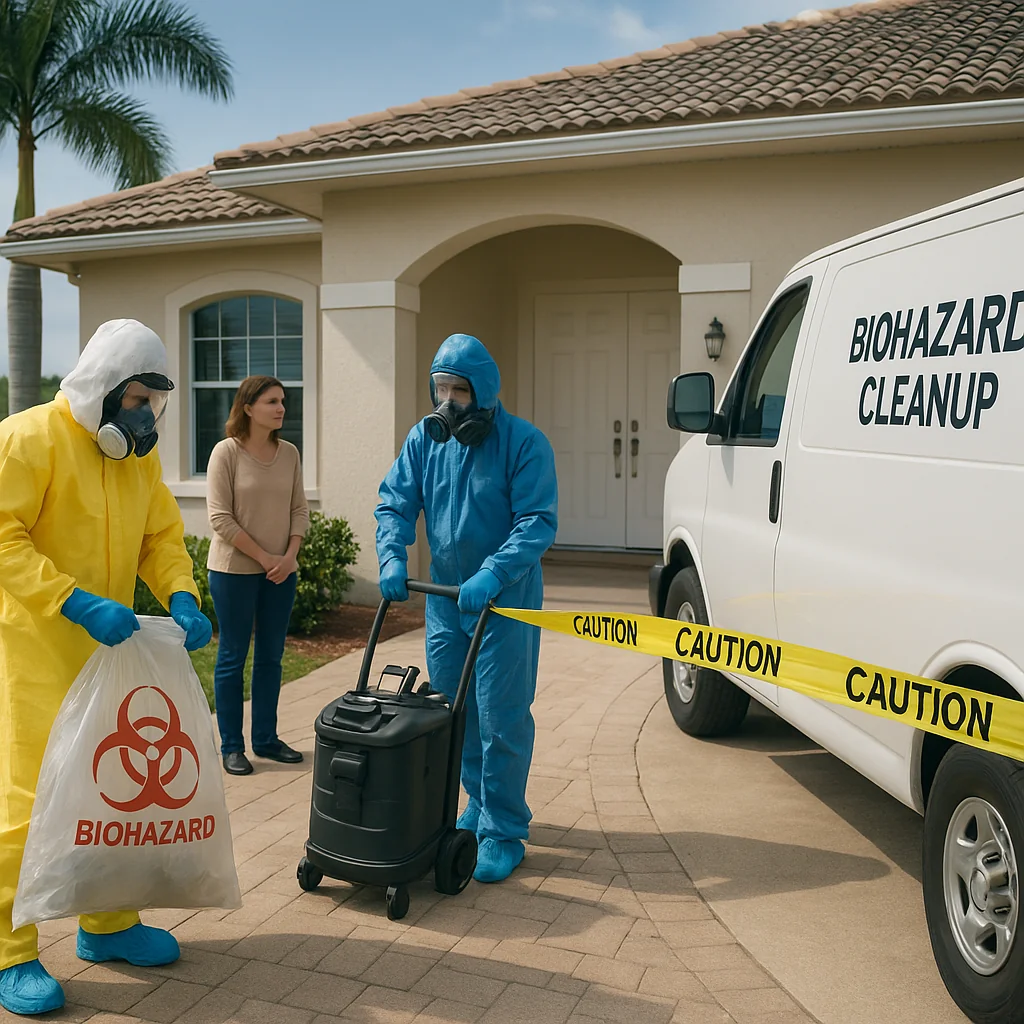
In Cape Coral, attempting biohazard cleanup yourself means handling pathogens like hepatitis or MRSA that flourish in our humid subtropical climate, often leading to cross-contamination through the air or our pervasive waterways. I’ve seen homeowners end up in the ER after inhaling aerosolized bacteria from improper handling of blood or feces in flooded garages. Local regulations under Florida’s health codes require certified pros for anything involving bodily fluids or infectious waste, and DIY efforts usually spread the problem worse.
For Cape Coral homeowners, biohazards hit hard because our canals and frequent storms turn minor incidents into major health hazards. Whether it’s a sewage overflow from a clogged line or an unattended death in an older canal-front home, ignoring the pros invites mold growth on top of the infection risk. Over 15 years responding to these calls here, I’ve cleaned up enough to know: touching it yourself rarely ends well.
Common Causes of Biohazards in Local Homes
Cape Coral’s setup breeds specific biohazard scenarios. Our aging plumbing in homes built during the 1970s boom often fails under hurricane-season rains, causing sewage backups loaded with E. coli and other fecal coliforms. Rodent infestations spike in winter when they seek shelter in our slab foundations, leaving urine trails that test positive for hantavirus in about 20% of cases I encounter.
Unattended deaths are another big one—elderly folks living alone near the Yacht Club might go undiscovered for days, leading to decomposition fluids seeping into drywall. Hoarding situations exacerbate this; I’ve pulled 50-pound bags of waste from properties where neglect turned clutter into breeding grounds for flies carrying salmonella. And don’t forget trauma scenes from boating accidents—blood on docks mixes with brackish water, creating slime that harbors vibrio bacteria.
Key Local Triggers
- Hurricanes and flooding: Post-Irma, we saw a 40% uptick in contaminated floodwater entering homes via sump pump failures.
- Canal proximity: Over 400 miles of canals mean brackish overflow contaminates yards and garages regularly.
- High humidity: 80-90% average keeps pathogens viable weeks longer than in drier areas.
Warning Signs That Demand Professional Attention
You spot a dark stain on the carpet? That’s not just old soda—discoloration with a sweet, putrid odor signals decomposition. In Cape Coral, watch for black, greasy residue on walls from sewage aerosol; it glows under blacklight and indicates fecal matter. Persistent flu-like symptoms in the household after a ‘cleanup’ attempt scream airborne pathogens.
Other red flags: swarms of flies in unusual spots, like inside AC vents, or a home that smells worse at night when humidity peaks. If your pet avoids a room or drywall feels spongy, bacteria have likely penetrated the structure. I’ve had calls where homeowners bleached surfaces, only for green mold to bloom underneath because they missed the hidden reservoirs.
| Sign | Severity Level | DIY Risk |
|---|---|---|
| Foul, lingering odor | Medium | Masking hides spread |
| Visible fluids/stains | High | Skin absorption |
| Household illness | Critical | Secondary infections |
| Mold growth post-clean | High | Structural damage |
What to Do Right Now – Secure the Scene
First, evacuate everyone and the pets. Shut off HVAC to prevent spore circulation—our central units push contaminants house-wide fast. Tape off the area with plastic sheeting and ‘Do Not Enter’ signs; keep doors closed. Document with photos from a distance for insurance, but never enter without PPE.
Call authorities if it’s a potential crime scene or unattended death—Lee County Sheriff’s Office handles first response. For sewage or medical waste, notify your health department; they flag it as a public hazard. Drink bottled water until pros confirm no cross-contamination. And ventilate outside only—fans blowing inward worsen aerosolization.
- Evacuate immediately.
- Isolate the area.
- Contact pros—don’t wait for symptoms.
Cape Coral’s Unique Challenges Amplify the Risks
Our flat terrain and 400+ miles of canals mean floodwater lingers, mixing sewage with red tide bacteria during summer blooms. Homes in Four Mile Cove Area see this worst—brackish intrusion turns garages into petri dishes. Older concrete-block homes absorb fluids deeply; pressure washing pushes it into block cores where it festers.
Hurricane season? Forget DIY—post-storm debris hides needles or animal carcasses that rot in 90-degree heat. In West Cape Coral, clay soils hold moisture, prolonging bacterial survival. Winter cold snaps drive pests indoors, and spring rains flush it all out. Pros account for this; homeowners using Home Depot kits miss the local nuances.
How a Pro Handles Biohazard Cleanup On-Site
We start with full-body Tyvek suits, N95+ respirators, and double gloves—levels beyond what Lowe’s sells. Air scrubbers with HEPA and carbon filters run 24/7, testing PPM levels drop below 1 before stopping. We use enzyme digesters on proteins, not bleach, which coagulates blood and leaves residue.
Structural demo is key: cut out 2 feet beyond visible damage, bag waste in red biohazard liners, and fog with hospital-grade disinfectants. Post-clean, we swab for ATP and culture pathogens—zero growth guaranteed. In hoarding cases like those needing hoarding cleanup, we sort waste streams compliantly. Decon takes 3-7 days; DIY skips 80% of this, per my post-job audits.
For a Yacht Club condo with sewage overflow, we pressure-wash exteriors at 4,000 PSI after internal gutting, preventing neighbor spread via shared walls. Insurance billing? We handle it seamlessly.
Prevention Tips Tailored to Cape Coral Living
Seal canal-side cracks with hydraulic cement—water intrusion starts 70% of jobs. Install backflow preventers on sewers; city rebates cover half. Rodent-proof with steel wool and copper mesh, especially pre-winter. Keep AC filters changed monthly—clogged ones recirculate spores.
For vulnerable family members, motion-sensor lights deter break-ins leading to trauma scenes. Annual plumbing scopes catch clogs early. And stock a basic spill kit for minor blood, but anything over a cup? Call pros. These steps cut my repeat calls by half in proactive clients.
When It’s Time to Call Cape Coral Biohazard Pros
If you’ve got fluids, odors, or illness tied to a spill, it’s pro time—no exceptions in our climate. We’re equipped for everything from Yacht Club Area condos to mainland hoards. Reach out at (239) 327-0029 for a no-obligation assessment; we’ve kept countless local families safe without turning it into a bigger mess.
Leave a Reply