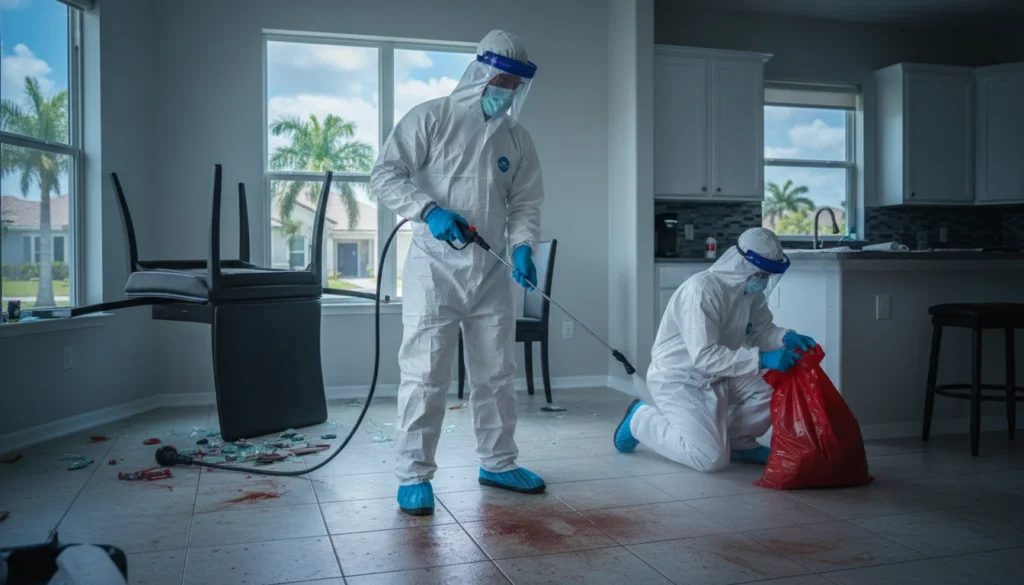
In Cape Coral, bloodborne pathogens from incidents like accidents or unattended deaths spread fast due to our humid subtropical climate and canal-side homes that trap moisture. Homeowners risk serious health issues like hepatitis B or C without proper cleanup, as DIY efforts often miss hidden contamination in porous surfaces. Calling professionals ensures complete decontamination using EPA-approved methods tailored to our local environment.
I’ve walked into hundreds of Cape Coral homes where a small spill turned into a major health hazard because folks tried handling it themselves. Our waterways and frequent rains make bloodborne pathogens—think HIV, hepatitis, or bacteria like staph—a persistent threat that doesn’t just wipe away. Understanding this helps you protect your family and property before it’s too late.
Common Causes of Bloodborne Pathogen Exposure in Cape Coral Homes
Most calls we get stem from trauma scenes, medical accidents, or death in the home. A suicide cleanup might involve arterial spray that soaks into drywall, while a crime scene cleanup leaves blood pools mixing with our sandy soil if outdoors. Needle sticks from IV drug use or even pet injuries expose fluids carrying pathogens.
Locally, fishing accidents near the canals or boating mishaps bring injuries home, where blood dries on concrete patios. Unattended deaths, common in our aging population, lead to decomposition fluids seeping into subfloors—our elevated homes on slabs make this tricky. Hurricanes like Ian exacerbate it, flooding properties and reactivating dried pathogens.
Key Local Triggers
- Boating and fishing injuries: Blood on docks washes into homes.
- Medical emergencies: Falls in older ranch-style homes common here.
- Animal attacks: Alligators or stray dogs near water edges.
Warning Signs of Bloodborne Pathogen Contamination
Don’t wait for smells; early signs include reddish-brown stains that don’t bleach out, sticky residues on floors, or unexplained illnesses like flu-like symptoms after contact. In Cape Coral’s heat, rust-colored spots on carpets signal dried blood reacting with humidity. Watch for black mold growth around edges—pathogens feed it.
Severe cases show heavy odors penetrating HVAC, or flies clustering unusually. Test by shining a blacklight: blood glows yellowish. If your home feels “off” after an incident, assume contamination.
| Sign | Severity | Action |
|---|---|---|
| Visible stains | Low | Isolate area |
| Persistent odor | Medium | Ventilate, call pro |
| Illness in household | High | Evacuate, pros now |
What to Do Right Now If You Suspect Contamination
First, evacuate everyone and pets—no touching. Seal the area with plastic sheeting and tape; our AC pulls contaminants through vents. Spray 10% bleach solution from afar to initially kill surface pathogens, but wear gloves, goggles, N95 mask minimum.
Wash exposed skin with soap and water for 15 minutes. Document with photos for insurance. Never use fans—they aerosolize fluids. In Cape Coral, notify neighbors if outdoors, as wind carries droplets over canals.
- Secure site.
- Personal decontamination.
- Contact authorities if crime-related.
- Call for odor removal and deodorization pros.
How Professionals Handle Bloodborne Pathogen Cleanup
We start with full PPE: Tyvek suits, respirators, booties. Air quality test with ATP meters for organic residue—anything over 100 RLU means contaminated. Remove porous items like carpets entirely; they harbor pathogens indefinitely.
Disinfect with hospital-grade quaternary ammonium or accelerated hydrogen peroxide, followed by EPA List N for viruses. HEPA vacuums capture 99.97% particles, then ozone generators for odors. In our area, we check for flood-damaged subfloors, using antimicrobial sealants. Final clearance testing verifies safe levels—under 20 CFU/m³ air.
DIY stops at surface; we excavate. Costs? Minor spill $500-1500, full room $3000+, depending on size.
Cape Coral’s Unique Challenges with Biohazards
Our 90%+ humidity lets bacteria double every 20 minutes in blood residue. Canals mean brackish water mixes with spills, breeding resistant strains. Older homes in West Cape Coral have tile over concrete that cracks, trapping fluids underneath.
Seasonal rains from June-November flush pathogens into yards, contaminating AC units. Hurricane debris litters properties, hiding hazards. Central neighborhoods like Central Cape Coral see more due to density. Salt air corrodes PPE, so we double up.
Prevention Tips for Cape Coral Homeowners
Store first aid kits with biohazard bags. Install GFCI outlets near water to prevent shocks leading to bleeds. Seal cracks in slabs with epoxy. Train family on exposure: rinse immediately.
For high-risk homes—elderly or near canals—keep bleach on hand, but know limits. Annual HVAC filter changes block spread. Mosquito screens stop vectors carrying pathogens.
- First aid training via Red Cross.
- Non-porous mats in garages.
- Pet vaccines against rabies.
When to Call a Pro in Cape Coral
Skip DIY if over a cup of blood, any death, or porous surfaces involved—pros prevent cross-contamination. We’ve seen hepatitis traces linger months in humidity. For peace of mind, reach Cape Coral Biohazard Pros at (239) 327-0029; we’re equipped for your neighborhood’s specifics.
Leave a Reply