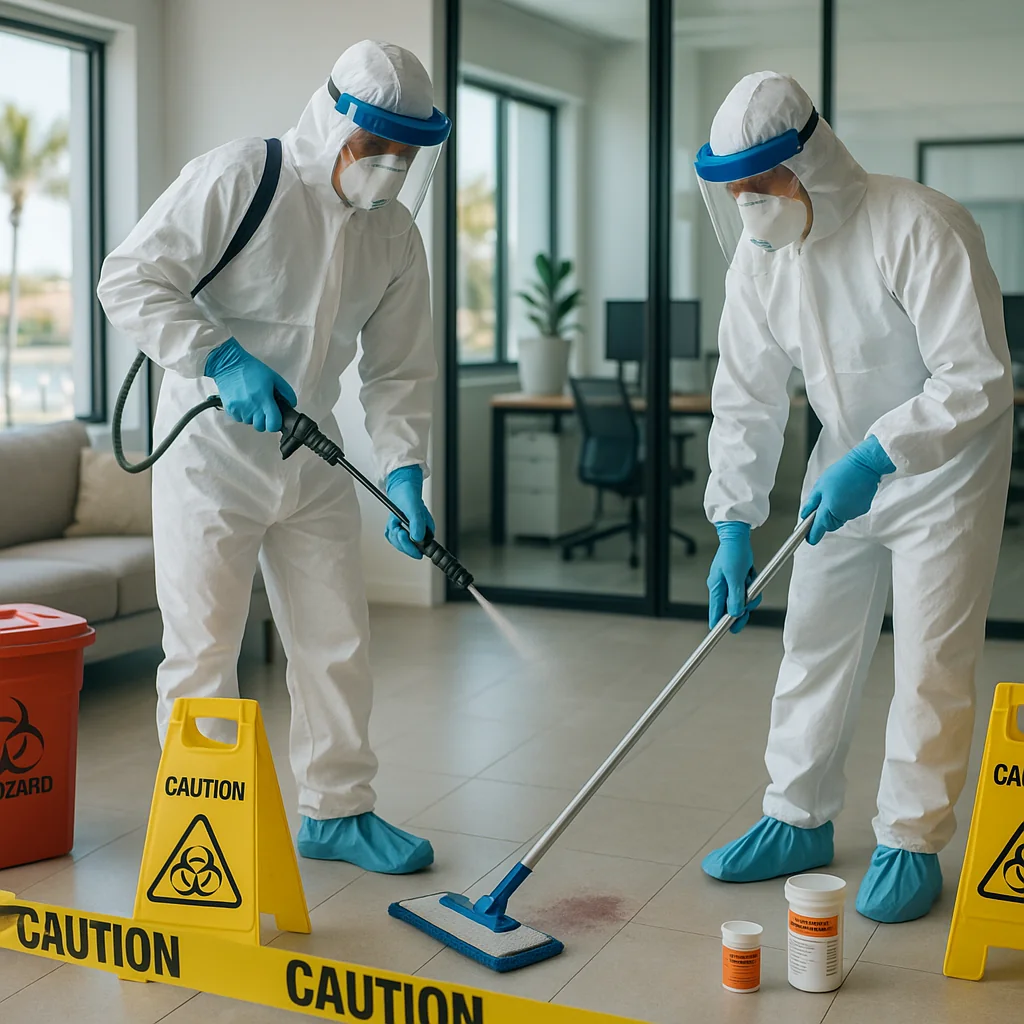
Blood cleanup in Cape Coral demands quick action to contain the spill, ventilate the area, and avoid direct contact without proper PPE, especially in our humid subtropical climate where pathogens thrive fast. For homes and businesses, whether it’s a minor cut or a serious incident, the key is isolating the area and calling pros if there’s any pooling or drying blood larger than a dinner plate. Local factors like high humidity and canal proximity mean blood can lead to mold or attract pests if not handled right.
In Cape Coral, blood spills happen more often than you’d think—from kitchen accidents in family homes to slips in restaurants along Del Prado. Our older concrete block houses and waterfront condos make containment tricky, and with snowbirds returning seasonally, businesses see upticks in mishaps. Getting it wrong risks health hazards like hepatitis or bacterial infections, plus lingering odors that stick in Florida’s heat.
Common Causes of Blood Spills in Cape Coral Homes and Businesses
I’ve cleaned up after falls in bathrooms of mid-century ranch homes common here, where tile floors get slick from our mugginess. Nosebleeds from dry AC in summer, cooking cuts in busy kitchens, and pet injuries top the list for residences. Businesses face bar fights at spots near Yacht Club Area docks or warehouse slips on oily concrete.
Graver causes include medical emergencies, like heart attacks in golf course condos, or violent incidents. Crime scene cleanup calls spike after domestics in family neighborhoods, while suicide cleanup often involves bedrooms in secluded NE Cape Coral properties. Boating accidents near Four Mile Cove Area bring blood from prop strikes onto docks or boats trailing into garages.
Warning Signs It’s Beyond DIY
Small drops under 2 tablespoons from a cut finger? Wipe with bleach solution if you’re gloved. But watch for these red flags: pooled blood over 4 inches wide, dried crusting on porous surfaces like carpet, foul odors from breakdown in 80+ degree heat, or visible tissue. In Cape Coral’s salt air, rust stains mimic blood but test with hydrogen peroxide—fizz means organic matter.
Health clues: unexplained illness after exposure, or black mold spots forming in 48 hours due to humidity. For businesses, customer complaints about smells or OSHA violation risks signal pro intervention. If it’s post-trauma, assume bloodborne pathogens; hep B survives days in dried blood here.
| Sign | Severity | Action |
|---|---|---|
| Drops <2 tbsp | Low | DIY with PPE |
| Pool >4″ | Medium | Contain & call pro |
| Dried + odor | High | Pro only |
Immediate Steps to Take Safely Right Now
- Evacuate and isolate: Keep everyone out, close doors, post “Do Not Enter”—crucial in open-plan homes with canal breezes spreading aerosols.
- Ventilate: Open windows opposite the spill; our trade winds help but avoid fans blowing droplets.
- Protect yourself: Double glove nitrile (latex breaks down in heat), goggles, N95 mask. No bare hands—pathogens enter via micro-cuts.
- Contain: Absorb with paper towels from outside, bag as biohazard waste. No vacuuming; it aerosolizes.
- Document: Photos for insurance, note time/size for pros.
Avoid bleach initially on unknowns—it reacts badly with some cleaners. Rinse small spills with water first if safe.
How Professionals Handle Blood Cleanup On-Site
We arrive in 60-90 minutes for Cape Coral, suited in Tyvek, respirators, booties to track nothing out. Assessment: ATP swabbing tests contamination levels—over 1000 RLU means deep clean. Removal: Enzymatic cleaners break proteins (blood’s 80% water, but solids linger), then 10% bleach or phenolic disinfectants, EPA-listed for bloodborne pathogens.
For carpets in tract homes, we cut out sections—our soil’s sandy but holds stains. Hardwood in newer builds? Steam extraction post-disinfect. Businesses get HEPA air scrubbers running 24/7. Decon takes 2-8 hours; odor neutralization with ozone or enzymes follows. Final ATP under 30 RLU, certificate provided. Waste to Lee County incinerator.
Cape Coral’s Unique Challenges for Blood Cleanup
Humidity 70-90% year-round speeds bacterial growth—E. coli doubles hourly above 80F. Hurricane season floods basements near canals, mixing blood with sewage. Older 1970s homes have unsealed grout sucking in fluids; post-Irma, we’ve seen spills reactivate in walls.
Seasonal snowbirds mean vacant returns to decomposed incidents. Waterfront properties risk tidal backflow contaminating garages. Businesses in tourist strips deal with volume—multiple slips nightly. Our limestone bedrock means groundwater contamination risks if not sealed properly.
Prevention Tips Tailored to Local Homes and Businesses
- Floors: Non-slip mats in bathrooms, epoxy coatings in garages withstand our wet-dry cycles.
- First aid: Stock trauma kits with QuikClot; train staff yearly—Florida OSHA requires it for high-risk spots.
- Maintenance: Seal cracks in concrete block walls; our termite bait stations don’t interfere.
- Businesses: Nightly deep cleans, blood spill kits by registers.
- Seasonal: Pre-snowbird inspections for AC drips causing slips.
For high-risk like marinas, install auto-shutoff hoses to prevent pressure washer bleeds.
When to Call a Pro in Cape Coral
DIY tiny fresh spills if you’re comfortable, but anything pooled, dried, or trauma-related needs experts to avoid fines or health risks—Lee County health codes mandate pro cleanup for regulated waste. Cape Coral Biohazard Pros handles this daily across the city; reach us at (239) 327-0029 for same-day response. Better safe than facing a $500+ remediation later.
Leave a Reply