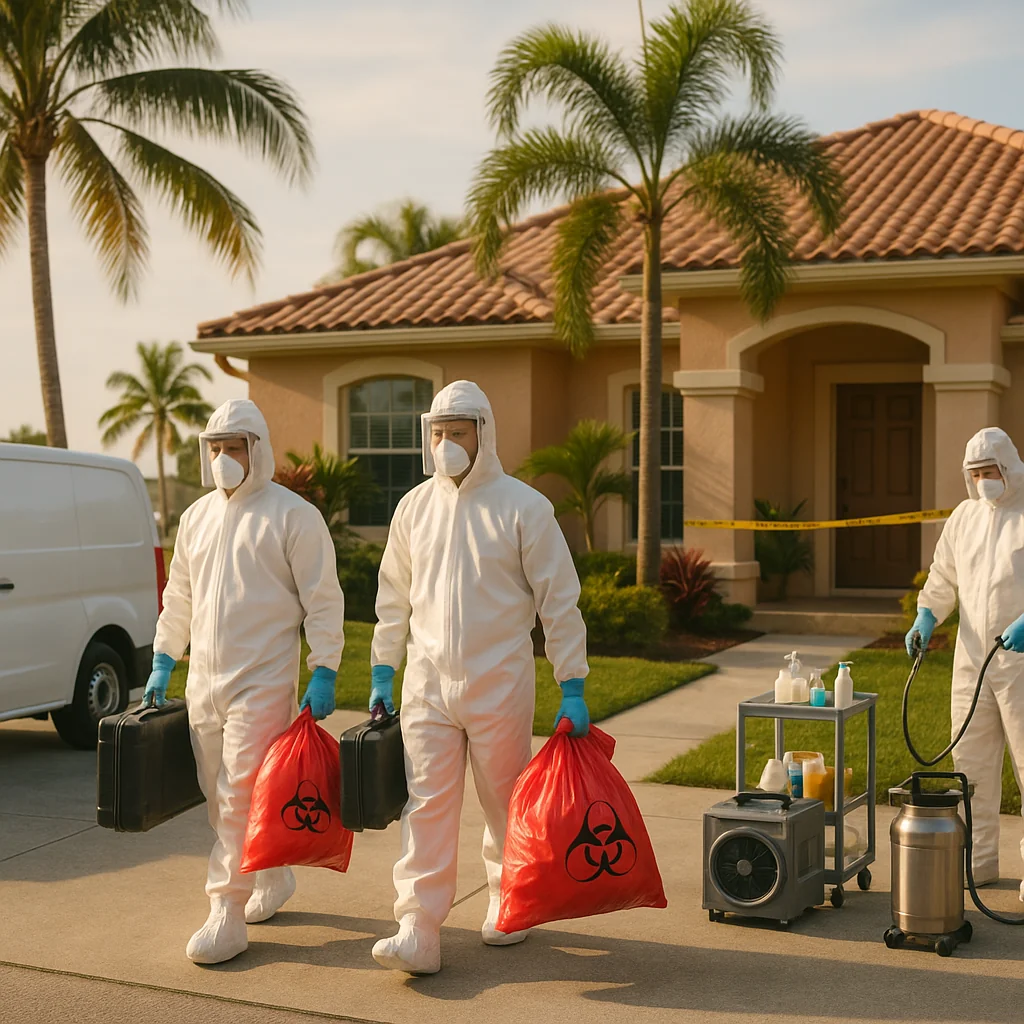
Crime scene cleanup in Cape Coral means safely removing blood, bodily fluids, and biohazards from homes after violent incidents like homicides, suicides, or accidents, following strict OSHA and EPA guidelines to protect families from pathogens. In our canal-lined city with high humidity and frequent storms, these scenes can spread contaminants fast through porous concrete blocks and standing water. Families need to secure the area, avoid touching anything, and call certified pros immediately to prevent health risks and property damage.
Here in Cape Coral, we’ve seen how quickly a single incident turns a family home into a health hazard, especially with our subtropical climate accelerating decomposition. Homeowners often face this without warning, and knowing the right steps can make all the difference between safe recovery and ongoing exposure.
Common Causes Requiring Crime Scene Cleanup in Cape Coral
Most calls we get stem from suicides, which account for over half the scenes in Southwest Florida—quiet tragedies in garages or bedrooms of our mid-century ranch homes. Homicides happen too, often tied to domestic disputes or rare break-ins in neighborhoods like Central Cape Coral. Then there are accidents: falls in older homes with tile floors that get slick, or vehicle-pedestrian crashes near our busy waterways.
Unattended deaths also pile up, especially among snowbirds who return to find months-old remains. Our high water table means fluids seep into slabs quickly, making extraction tougher. Drug overdoses round it out, leaving needles and residues that harbor hepatitis and HIV.
Warning Signs That Demand Immediate Action
Look for heavy blood pooling—more than a cup means biohazard level. Foul odors penetrating walls signal decomposition gases like cadaverine, which our 90% humidity amplifies. Stains on grout, carpets, or drywall that won’t bleach out indicate porous surface contamination.
Other red flags: insect swarms (flies lay eggs in fluids within hours here), discolored walls from seepage, or visible tissue matter. Use this table to gauge severity:
| Sign | Severity | Action |
|---|---|---|
| Small blood spots | Low | DIY bleach if fresh, under 24 hours |
| Puddles or splatter | Medium | Ventilate, isolate, call pro |
| Odor + stains + bugs | High | Evacuate, pros only |
In West Cape Coral‘s flood-prone yards, watch for outdoor spread via runoff.
First Steps: What to Do Right Now
Step 1: Secure the scene—lock doors, post ‘Do Not Enter’ signs, keep pets and kids out. Step 2: Ventilate from outside only; fans can aerosolize pathogens. Step 3: Document with photos for insurance, but no touching.
- Wear gloves if you must move valuables nearby, but discard immediately.
- Avoid water—our soft canal water spreads bacteria.
- Notify police if not already done; they release after investigation.
DIY small fresh spots under 2 sq ft with 10% bleach solution after 30 min dwell time, but anything bigger? Stop. Pros handle 99% effectively; amateurs risk cross-contamination.
How Professionals Handle Crime Scene Cleanup
We start with full PPE: Tyvek suits, respirators with P100 filters, double gloves. Assessment: ATP swabbing tests contamination levels—anything over 500 RLU means deep clean.
Removal: Gross debris bagged in red biohazard liners, then enzymatic digesters break down proteins. Pressure washing at 2500 PSI for exteriors, but indoors it’s HEPA vacs and ozone for odors. Disinfection: EPA-listed hospital-grade quaternary ammonium, dwell 10 min, multiple passes.
For crime scene cleanup, we seal drywall if penetrated, test air quality post-job. In Cape Coral’s concrete homes, we grind and epoxy slabs to trap residues. Whole process: 4-8 hours for average 200 sq ft room, full decomp up to days.
Cape Coral’s Unique Challenges with Biohazards
Our 85-degree averages speed bacterial growth twofold vs drier climates—fluids turn putrid in 48 hours. Hurricane season floods scenes, mixing sewage with bloodborne pathogens. High water table prevents digging; we use sump pumps for slabs.
Older housing stock from the ’60s has asbestos in tiles, complicating demo. In the Yacht Club area, waterfront homes see salt corrosion on tools faster. Snowbird returns spike cases January-March, with AC mold compounding smells.
Suicide cleanup often involves bathrooms where bleach reacts badly with organics, needing pros for safe neutralization.
Prevention Tips Tailored to Cape Coral Homes
Install grab bars in wet areas—our tile floors cause 30% of elder falls. Secure meds in locked cabinets; overdoses spike with tourists. Motion lights deter break-ins along dark canal paths.
- Check on isolated neighbors weekly, especially summer vacancies.
- Upgrade to sealed grout in kitchens/baths.
- Carbon monoxide detectors—silent killer in enclosed lanais.
Home watches via HOAs catch early unattended deaths. Regular pest control fights fly breeding in humid vents.
When It’s Time to Call Local Pros
If there’s odor, pooling fluids, or you’re overwhelmed—call certified biohazard teams now. In Cape Coral, outfits like Cape Coral Biohazard Pros manage the full scope, from police coordination to insurance billing. Reach out at (239) 327-0029 for a no-obligation assessment; we’ve handled these scenes across the city for years, restoring safety without the trauma.
Leave a Reply