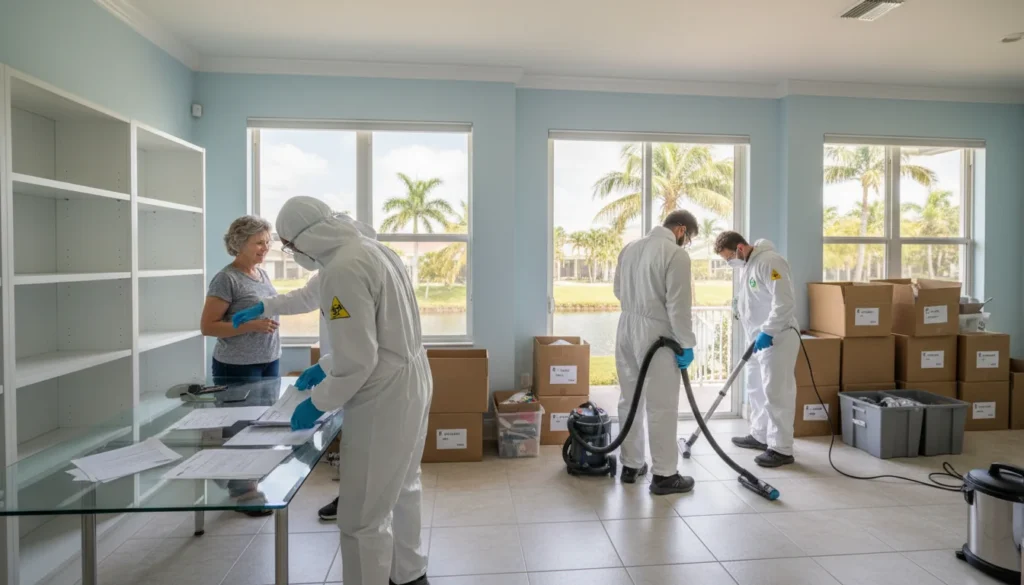
Hoarding cleanup in Cape Coral starts with safety assessments to identify biohazards like mold from our humid air and pest infestations drawn by canal proximity, followed by compassionate sorting with the homeowner’s input where possible. Professionals use PPE and containment to remove waste without spreading contaminants, then deep clean and deodorize to restore the space. In our canal-lined city, this approach prevents health risks amplified by Florida’s wet climate.
For Cape Coral homeowners, hoarding situations hit hard because our older ranch-style homes from the ’70s boom have crawlspaces and garages that fill up fast, turning into breeding grounds for issues during rainy seasons.
Common Causes of Hoarding in Cape Coral Homes
I’ve walked into hundreds of hoarding cases here, and it often stems from emotional attachments built over decades in the same family home. Loss of a spouse after retirement, or isolation in sprawling suburbs like NE Cape Coral, where neighbors are spread out, can lead to keeping every memento. Our transient population from northern states brings downscaling challenges too—folks move here for the waterways but struggle letting go of northern belongings that don’t fit canal life.
Medical issues play a role; mobility limits mean papers, clothes, and boxes pile up unchecked. Add Cape Coral’s frequent storms—hurricane prep turns into permanent stockpiling of batteries, water jugs, and tarps that never get used.
Local Triggers Specific to Southwest Florida
- High humidity fosters ‘just in case’ collecting of dehumidifiers and fans that malfunction and mold over.
- Canal-adjacent properties in areas like Four Mile Cove Area attract rodents, worsening hoarding by creating more ‘clutter’ from nests.
- Seasonal snowbird returns reveal years of accumulation during off-months.
Warning Signs Your Cape Coral Property Needs Hoarding Cleanup
Look for pathways narrowed to 18 inches or less—that’s a fire marshal red flag I’ve seen trigger citations in West Cape Coral canal homes. Strong odors seeping from vents indicate decaying organics, common in our sealed AC units. Structural sags from roof loads of debris, or floors buckling under weight, signal urgency.
| Severity Level | Signs | Health Risks in Cape Coral |
|---|---|---|
| Mild | Organized stacks, minor pest droppings | Allergens triggering asthma in humid air |
| Moderate | No visible floors, insect swarms | Mold growth from trapped moisture |
| Severe | Structural damage, human waste | Biohazards like leptospirosis from canal rats |
Exterior clues: overgrown yards hiding piles, or utility shutoffs from blocked access.
What to Do Right Now: Safe First Steps for Homeowners
Don’t dive in solo if biohazards are suspected—our heat speeds decomposition. Start outside: secure the property with tarps over piles to block rain, which turns paper into mold factories here. Document everything with photos for insurance or family discussions; timestamped pics help track progress.
- Notify close family or a trusted local contact—avoid confrontation.
- Check for utilities: shut off water if plumbing’s compromised to prevent odor removal nightmares.
- DIY small areas only: wear gloves, N95 mask, sort into keep/donate/trash bins, but stop at sharp objects or fluids.
If you’ve got bugs or smells, that’s pro territory—pests burrow deep in Florida soil.
How Professionals Handle Hoarding Cleanup in Cape Coral
On-site, we begin with a walk-through, mapping hot zones for hazards like sharps from medical hoarding or feces from pet accumulations. Full PPE—Tyvek suits, respirators—keeps us safe while containing dust with negative air machines and plastic sheeting. Sorting happens in phases: 1-2 days for initial removal using conveyor belts to trucks, avoiding resident distress by involving them in decisions where mentally able.
Biohazard protocols kick in for blood, mold, or sewage—HEPA vacs, enzyme cleaners, then ozone or thermal fog for odors. In Cape Coral, we test for Aspergillus from water-damaged drywall, common post-hurricanes. Final disinfection with EPA-approved agents, followed by junk haul to permitted landfills. Whole process: 3-10 days depending on 1,000-10,000 sq ft affected, with daily updates.
For trauma-related hoarding, like after a suicide cleanup, we coordinate sensitively with authorities.
Cape Coral-Specific Challenges in Hoarding Situations
Our 400 miles of canals mean groundwater seepage turns basements—rare but present in older slabs—into soppy messes under piles. Hurricane season (June-Nov) dumps inches of rain, accelerating rot; I’ve pulled black mold from under newspaper stacks post-Irma. Sandy soils shift under heavy loads, cracking slabs in mid-century homes. Pests thrive: palmetto bugs, roof rats from mangroves. AC strains under dust loads, spiking electric bills and mold in ducts.
Adapting to Local Housing Stock
- 1970s concrete block: porous to humidity-trapped spores.
- Waterfront lots: flood risks compound waste decomposition.
- HOA neighborhoods: swift code enforcement forces rushed cleanups.
Prevention Tips to Avoid Future Hoarding Buildup
Regular ‘one in, one out’ rules work wonders—donate duplicates yearly via local Cape Coral thrift spots. Install shelving in garages to verticalize storage, fighting our flat layouts. Mental health check-ins: connect with Lee Health resources or senior centers. Declutter quarterly, focusing on paper—digitize docs to beat our termite threats. For families, set boundaries early; post-storm, use community cleanups to reset stockpiles.
When to Call a Pro for Hoarding Cleanup in Cape Coral
Call if DIY stalls at safety barriers, like unknown fluids or heavy lifting risking injury. Pros handle permits, waste manifests, and insurance claims seamlessly. For compassionate, expert Biohazard Cleanup in Cape Coral, Cape Coral Biohazard Pros gets it done right—reach us at (239) 327-0029 when you’re ready.
Leave a Reply