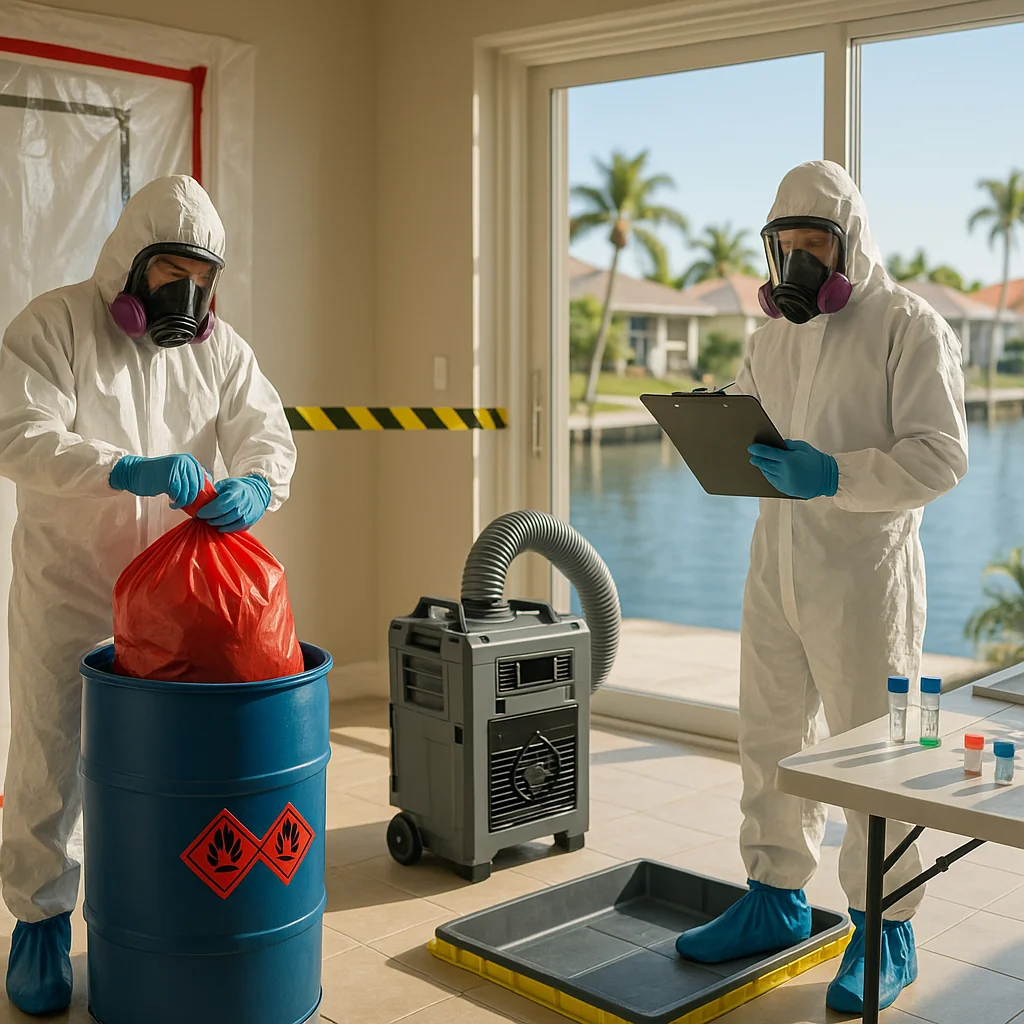
In Cape Coral, meth lab cleanup demands immediate notification to the Lee County Sheriff’s Office or Florida Department of Health, followed by professional remediation to meet Florida’s decontamination standards of less than 0.1 micrograms per 100 square centimeters. Homeowners can’t handle this DIY—it’s a biohazard requiring certified PPE, specialized testing, and disposal protocols under state law. Skipping pros risks health issues from lingering residues and potential fines up to $5,000 per violation.
Here in Cape Coral, with our canal-lined neighborhoods and older concrete block homes from the ’70s and ’80s boom, meth labs pop up more than you’d think, often in rentals or foreclosures. These aren’t just messy spots; they leave invisible chemical soups that seep into drywall, HVAC systems, and even crawlspaces, amplified by our steamy Gulf Coast humidity. Getting it right protects your family, property value, and avoids legal headaches specific to Lee County.
Why Meth Labs Show Up in Cape Coral Homes
Most meth labs we see stem from renters cooking small batches in garages or sheds, drawn by Cape Coral’s affordable housing and proximity to I-75 for supply runs. Vacant homes post-hurricane or during seasonal vacancies are prime targets—think those empty snowbird properties in NE Cape Coral with easy canal access for dumping waste. Landlords discover it during turnovers, buyers during inspections, or neighbors from the acrid smell wafting over fences.
Our sandy soil and high water table mean chemical runoff contaminates yards fast, turning a kitchen lab into an environmental mess. I’ve pulled up floorboards in Bimini Bay homes to find stained subfloors from pseudoephedrine cooks gone wrong.
Key Warning Signs of a Meth Lab in Your Cape Coral Property
Look for chemical odors like cat urine, ammonia, or ether—strongest near vents or AC units, which our humid air circulates everywhere. Inside, watch for burn marks on counters, coffee filters with red stains (from iodine), lithium strips from batteries, or piles of empty Sudafed boxes. Exteriors show propane tanks clustered oddly, heavy ventilation fans in windows, or black residue around exhausts.
| Sign | Severity | What It Means |
|---|---|---|
| Strong chemical smell | High | Active or recent cook; residues airborne |
| Excessive trash: filters, bottles | Medium | Shake-and-bake method common here |
| Windowless rooms with fans | High | Ventilation for fumes; fire risk |
| Dead vegetation near drains | Medium | Acid waste dumped in canals |
If you’re in the Four Mile Cove area, where homes back right to water, yellowed grass patches scream chemical dump.
What to Do Right Now If You Spot Meth Lab Evidence
Don’t touch anything. Ventilate by opening windows but stay out—fumes can cause respiratory burns. Call Lee County non-emergency at 239-477-1000 or 911 if active, then the Florida Poison Control at 1-800-222-1222 for exposure advice. Document everything with photos from outside: timestamps, locations, items visible.
- Evacuate everyone, especially kids and pets—meth residues mimic lead poisoning symptoms.
- Secure the property: lock it, post no-trespass signs.
- Contact a certified cleanup crew; DIY wiping surfaces spreads contamination.
Honest talk: basic ventilation is DIY-safe, but testing requires pros with GC-MS equipment.
How Professionals Tackle Meth Lab Cleanup Step by Step
We start with a site assessment: air monitoring for phosphine gas, swab tests on 20+ surfaces per room. If levels exceed 0.1 µg/100 cm², full decon. PPE is Level C: respirators, tyvek suits, double gloves—standard here because our heat makes sweating in gear brutal.
Gross decon: HEPA vacs for powders, then wipe-downs with solvent mixes like sodium hypochlorite for porous stuff. HVAC? We fog and replace filters, crucial in Cape Coral’s sealed homes. Porous items—carpets, drywall—get demo’d and bagged as hazwaste. Final post-testing verifies clearance; we submit to Florida DEP for records.
Pro tip: Odor lingers in our humidity; we use odor removal techniques like ozone generators post-decon.
Typical On-Site Timeline
- Day 1: Assessment, gross removal (4-6 hours)
- Day 2-3: Chemical wash, demo (1-2 days)
- Day 4: Final testing, clearance (half day)
For a 3-bed in Yacht Club area, expect 3-5 days total.
Cape Coral’s Unique Challenges for Meth Lab Remediation
Our 90%+ humidity keeps volatiles active longer—meth breaks down slower in moist air, embedding in concrete pores common in mid-century homes. Canal proximity means wastewater seeps back via sump pumps during king tides. Hurricane season floods expose hidden labs in attics, mixing residues with mold—double biohazard.
Lee County’s older stock—stucco over block—absorbs chemicals deeply; we’ve chipped plaster in Palacoast homes to find stained lath. Soil tests often needed near yards, as phosphine leaches into sandy fill dirt fast.
Florida Legal Requirements and Safety Protocols
Per Florida Statute 893.13 and DEP rules, clandestine labs trigger mandatory reporting to law enforcement. Cleanup must follow EPA Voluntary Guidelines, with third-party verification. No certificate of occupancy until cleared. Fines for non-compliance hit $1,000-$5,000, plus liability if you sell contaminated property.
Safety: NIOSH-approved respirators mandatory; waste goes to RCRA-permitted landfills. Insurers often void policies on uncleared sites.
Prevention Strategies for Cape Coral Homeowners
Screen tenants: check references, watch for cash-only deals. Install exterior cams on garages, especially in flood-prone spots. Annual HVAC inspections catch residue early. If buying, insist on meth test in home inspection—costs $300-500, saves thousands.
For rentals, add lease clauses banning chemicals; neighbors reporting smells early helps.
Even post-cleanup, monitor for health effects like headaches or skin irritation—residues can off-gas for months in our climate.
When to Call Cape Coral Biohazard Pros
Any suspicion means call pros immediately—DIY risks health and law. We’re equipped for Cape Coral’s quirks, from canal dumps to humid holdouts. Reach us at (239) 327-0029 for fast response; we’ve handled these sites coast-to-coast style, local knowledge included.
Leave a Reply