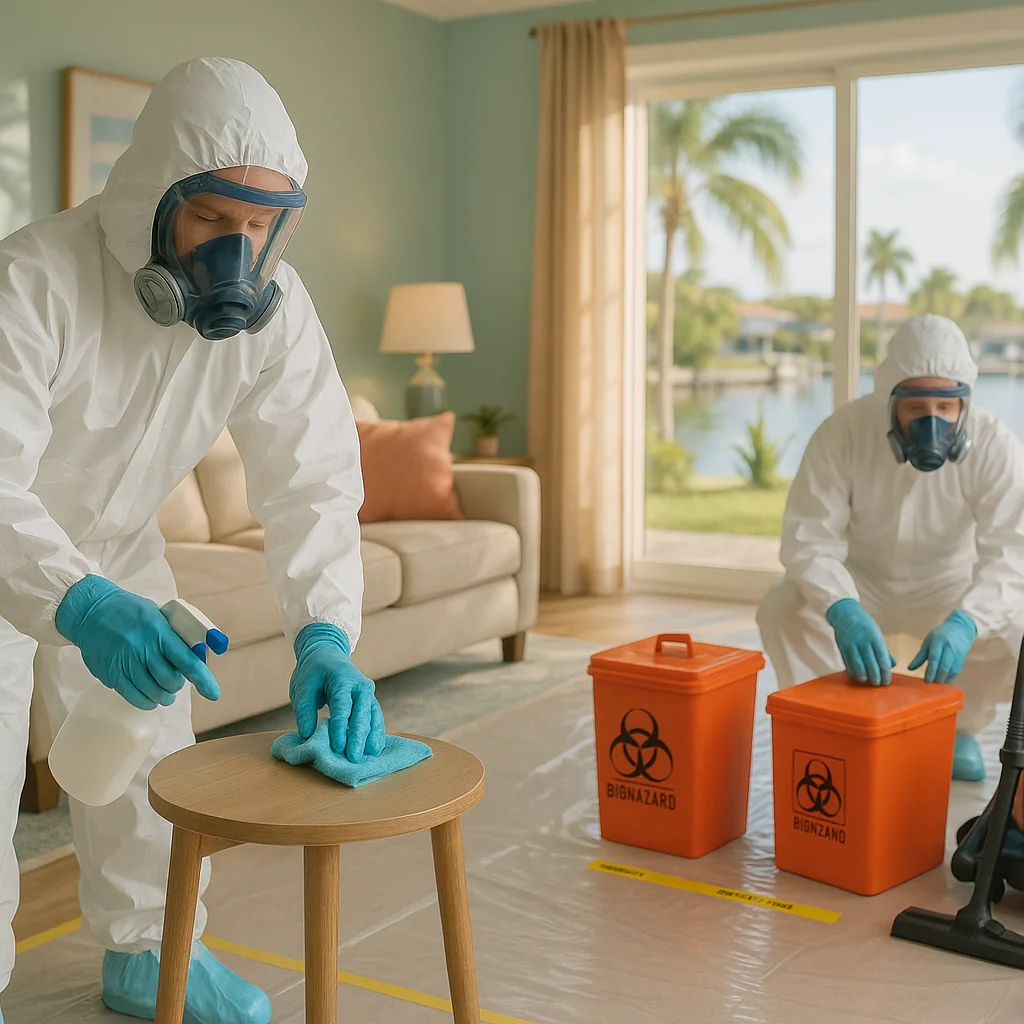
Suicide cleanup services in Cape Coral mean professional teams equipped to handle blood, bodily fluids, and tissue safely after a tragedy, restoring the space to livable condition. In our canal-lined city with high humidity, these jobs demand quick action to prevent mold from setting in or contaminants spreading via waterways. Local pros like those at Cape Coral Biohazard Pros follow strict protocols to decontaminate without risking further exposure.
For Cape Coral homeowners, a suicide scene isn’t just emotional—it’s a health hazard that can linger if mishandled, especially in older homes near the Caloosahatchee River where moisture accelerates decomposition. I’ve walked into dozens of these situations over the years, from apartments in Yacht Club Area to single-family houses in West Cape Coral, and the key is knowing when DIY stops and experts step in.
Common Causes Leading to Suicide Scenes in Cape Coral Homes
Cape Coral’s isolation in some sprawling neighborhoods can play a role—folks in NE Cape Coral might go unnoticed for days amid our seasonal influx of snowbirds. Mental health struggles, substance issues, or sudden losses hit hard here, where economic shifts in boating and construction affect families. The result? Scenes with heavy blood loss from methods like hanging, gunshot, or cutting, leaving behind pathogens like hepatitis or HIV that survive in our warm temps.
Typical Scenarios I’ve Seen
- Hanging in garages or bedrooms: Rigor mortis and lividity create pooled fluids that seep into concrete slabs common in our mid-century homes.
- Firearms in living rooms: High-velocity spatter hits walls, ceilings, and furniture, embedding fragments.
- Overdoses or slashing in bathrooms: Water mixes with blood, promoting bacterial growth fast in our humidity.
Our soil’s high water table means basements or low-lying slabs absorb contaminants easily, turning a contained scene into a widespread issue.
Warning Signs That Demand Immediate Attention
After discovery, look for pervasive odors— that sweet, metallic smell mixed with decay signals active biohazards. Stains on porous surfaces like carpet or drywall won’t bleach out; they’ll darken and spread. Insects drawn to the site, especially in summer, or unexplained moisture are red flags.
| Sign | Severity Level | Action |
|---|---|---|
| Faint odor, small stain | Low | Ventilate, isolate room—DIY possible short-term |
| Strong smell, visible fluids | Medium | Seal off, call pros within hours |
| Flies/maggots, structural damage | High | Evacuate, professional cleanup now |
In Cape Coral’s heat, low-severity can escalate overnight, so err on caution.
What to Do Right Now If You Discover a Scene
First, ensure safety—don’t touch anything. Call 911 if not already done, then secure the area with tape or signs. Ventilate from outside only to avoid aerosolizing particles. For homeowners, grab heavy gloves, but stop there; bleach mixtures often fail against proteins in blood.
- Document for authorities without entering.
- Keep family/pets away—contamination spreads on shoes.
- Contact a certified biohazard team; in Florida, we adhere to OSHA bloodborne pathogen standards.
DIY cleaning works for minor spills, like a cut finger, but suicide volumes overwhelm household methods and risk health department violations.
How Professionals Handle Suicide Cleanup On-Site
We arrive in full PPE: Tyvek suits, respirators, double gloves. Step one: containment with plastic sheeting and negative air machines to filter HEPA out spores. Then, gross removal—bio-bins for visible matter, absorbed with enzyme treatments that break down organics.
Disinfection hits with EPA-approved hospital-grade solutions, multiple applications since blood penetrates grout and wood. Porous items go to incineration; salvageable gets deep cleaned. Final ATP swabbing verifies no residue before air scrubbing for 24-48 hours.
For a standard 200 sq ft room, expect 8-12 hours on-site, longer if water damage from our frequent rains complicates things. We’ve done suicide cleanup in everything from condos in Four Mile Cove Area to waterfront homes where tidal surges add saltwater corrosion risks.
Cape Coral’s Local Factors Impacting Cleanup
Our subtropical climate—90% humidity, 90-degree summers—speeds decomposition twofold vs. drier areas, creating more gas and fluids within 24 hours. Canals everywhere mean runoff risks contaminating waterways, triggering environmental regs. Older housing stock from the 70s has unsealed slabs that wick fluids downward, requiring sub-surface treatments.
Seasonally, post-holiday spikes hit after snowbirds leave, and hurricane season floods exacerbate scenes near Jaycee Park. Soil’s sandy composition drains fast but carries pathogens to groundwater, so we use containment booms.
Prevention Tips for Cape Coral Residents
While we can’t prevent all tragedies, wellness checks in isolated West Cape Coral homes help. Install water leak detectors that double as air quality monitors. Community resources like NAMI Southwest Florida offer local support lines. For properties, non-porous flooring like vinyl reduces future cleanup scope.
Stock a basic kit: absorbents, gloves, but know limits. Regular mental health talks build resilience in our tight-knit yet spread-out city.
When to Call Cape Coral Pros
Any suicide or unattended death needs experts—don’t risk exposure or incomplete restoration. Cape Coral Biohazard Pros specializes in Biohazard Cleanup in Cape Coral, handling the unseen details so you can grieve safely. Reach out at (239) 327-0029 when it’s beyond your scope; we’re local and respond fast.
Leave a Reply