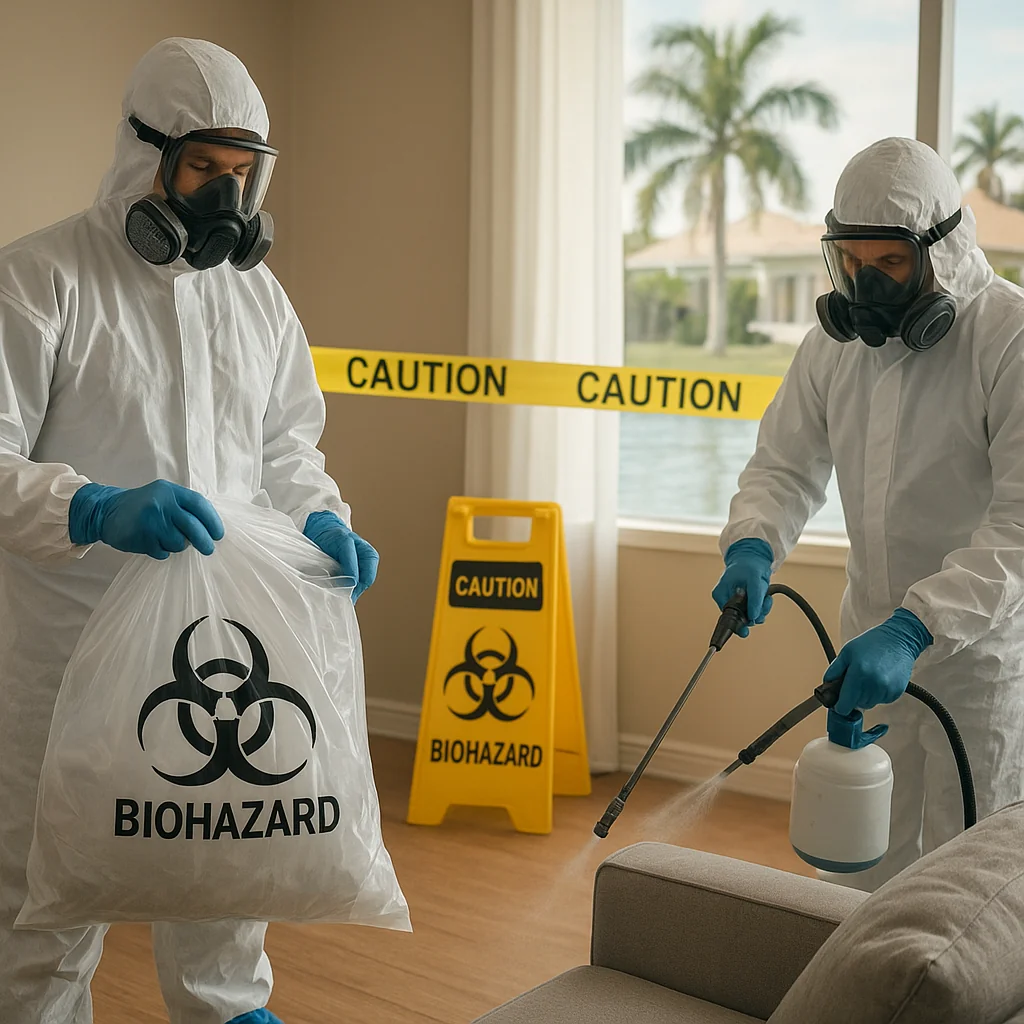
DIY trauma scene cleanup in Cape Coral often fails because homeowners underestimate bloodborne pathogens like hepatitis B, hepatitis C, and HIV that survive on surfaces for days in our humid air. Without proper PPE and EPA-registered disinfectants, you risk direct exposure or cross-contaminating your home, especially in older concrete block houses where fluids seep into porous mortar. I’ve cleaned hundreds of these scenes here, and the aftermath of botched DIY jobs includes lingering odors, health complaints from residents, and even fines for improper biohazard waste disposal.
In Cape Coral, with canals on every corner and hurricane season bringing extra moisture, trauma scenes from accidents or unattended deaths demand more than gloves and bleach. Homeowners try to save money or avoid stigma, but they end up creating bigger problems for their families and property. This post breaks down what goes wrong, signs to watch, and steps to protect yourself.
Why DIY Attempts Fail: The Core Problems
Most DIY cleanups start with good intentions but hit roadblocks fast. Blood and bodily fluids aren’t just messy—they’re loaded with bacteria, viruses, and proteins that bleach alone can’t break down. In Cape Coral’s 80-90% humidity year-round, these fluids dry slowly, embedding deeper into fabrics, wood, and drywall.
- Inadequate PPE: Garden gloves tear easily against sharp debris or bone fragments. Pros use Tyvek suits, N95 respirators, and face shields rated for biohazards.
- Wrong Cleaners: Household products like Lysol or ammonia don’t kill everything. They need 10% bleach solutions or phenolic disinfectants with 10-minute contact times.
- Disposal Errors: Bagging waste in trash cans risks leaks. Florida regs require double red biohazard bags and licensed transport to incinerators.
I’ve arrived at scenes in West Cape Coral where homeowners rinsed blood down drains, only for it to clog plumbing or contaminate groundwater near canals.
Warning Signs Your DIY Went Wrong
Don’t wait for illness to spot issues. Here are red flags I’ve noted after DIY attempts:
| Sign | Severity | What It Means |
|---|---|---|
| Persistent metallic odor | High | Decomposing proteins still active; pathogens thriving. |
| Dark stains reappearing after cleaning | Medium | Fluids penetrated porous surfaces like grout or unsealed concrete. |
| Family members with flu-like symptoms | Critical | Possible exposure to staph, HIV, or hep—get tested immediately. |
| Mold spots in 2-4 weeks | High | Residual moisture in our humid climate fueled growth. |
| Dead insects around the area | Low-Medium | Attracted to organic residue you missed. |
In NE Cape Coral neighborhoods with mid-century homes, unsealed block walls absorb fluids like sponges, leading to these stains months later.
What to Do Right Now If You’ve Tried DIY
Stop everything. Isolate the area with plastic sheeting and yellow caution tape. Ventilate with fans pushing air outward, not recirculating.
- Protect Yourself: Suit up in disposable coveralls, goggles, and respirator if available. No skin contact.
- Assess Damage: Check for hidden spread—lift carpets, peek behind baseboards. Blood wicks up 12-18 inches via capillary action.
- Contain Waste: Double-bag in heavy-duty red bags labeled “biohazard.” Don’t touch with bare hands.
- Initial Wipe-Down: Use paper towels soaked in 10% bleach (1:10 water), let sit 10 minutes, then remove. Never rinse into storm drains—Cape Coral’s canal system leads straight to the Caloosahatchee.
- Document: Photos for insurance or pros. Note any health effects.
This buys time, but don’t go further without certification. For scenes involving suicide cleanup, the emotional toll plus biohazards make pros non-negotiable.
How Professionals Handle Trauma Scenes Properly
We follow OSHA and CDC protocols tailored to Cape Coral conditions. First, full PPE donning in a mobile command setup outside. Then, ATP swabbing to baseline contamination levels—anything over 500 RLU means it’s not clean.
Step-by-step:
- Gross Removal: Scrape and bag solids with specialized tools—no vacuums that aerosolize particles.
- Enzymatic Digestion: Apply proteases to break down proteins, followed by hospital-grade disinfectants.
- Deep Decon: Fogging with hydrogen peroxide vapor reaches cracks. Porous items like mattresses go to landfill.
- Verification: Post-clean ATP tests under 20 RLU, plus air sampling for mold spores.
- Restoration: Seal walls with antimicrobial paint, replace subfloors if saturated.
In hurricane-prone areas like Four Mile Cove, we check for flood-aggravated spread where water mixed with fluids.
Cape Coral’s Local Factors Amplifying Risks
Our flat terrain, 50+ inches of annual rain, and sandy soil mean fluids migrate fast. Concrete block homes from the 1960s-80s have mortar joints that wick moisture 2-3 feet horizontally. Summer heat (90°F+) speeds bacterial growth—E. coli doubles every 20 minutes.
Hurricane and Flood Ties
Post-Ian, we’ve seen trauma scenes compounded by sewage backup cleanup from overwhelmed canals, turning blood into a bacterial soup.
Seasonal Patterns
Winter snowbirds mean unattended deaths in vacant homes, discovered months later with advanced decomposition. Humidity keeps everything viable longer than in drier climates.
Prevention: Know When DIY Isn’t Enough
Small blood spills from cuts? DIY with gloves and bleach if under 10 sq ft and no death involved. Anything bigger, with decomposition odors, or in rentals—call pros immediately to avoid liability.
Prep your home: Seal grout, keep HEPA vacuums, stock a biohazard kit. But for trauma scenes, prevention is recognizing limits early.
When to Call a Pro in Cape Coral
If there’s visible blood larger than a dinner plate, any decomposition smell, or you’re in a flood zone, stop and contact certified experts. Cape Coral Biohazard Pros handles these daily—reach us at (239) 327-0029 for rapid response without judgment. Your health and home come first.
Leave a Reply