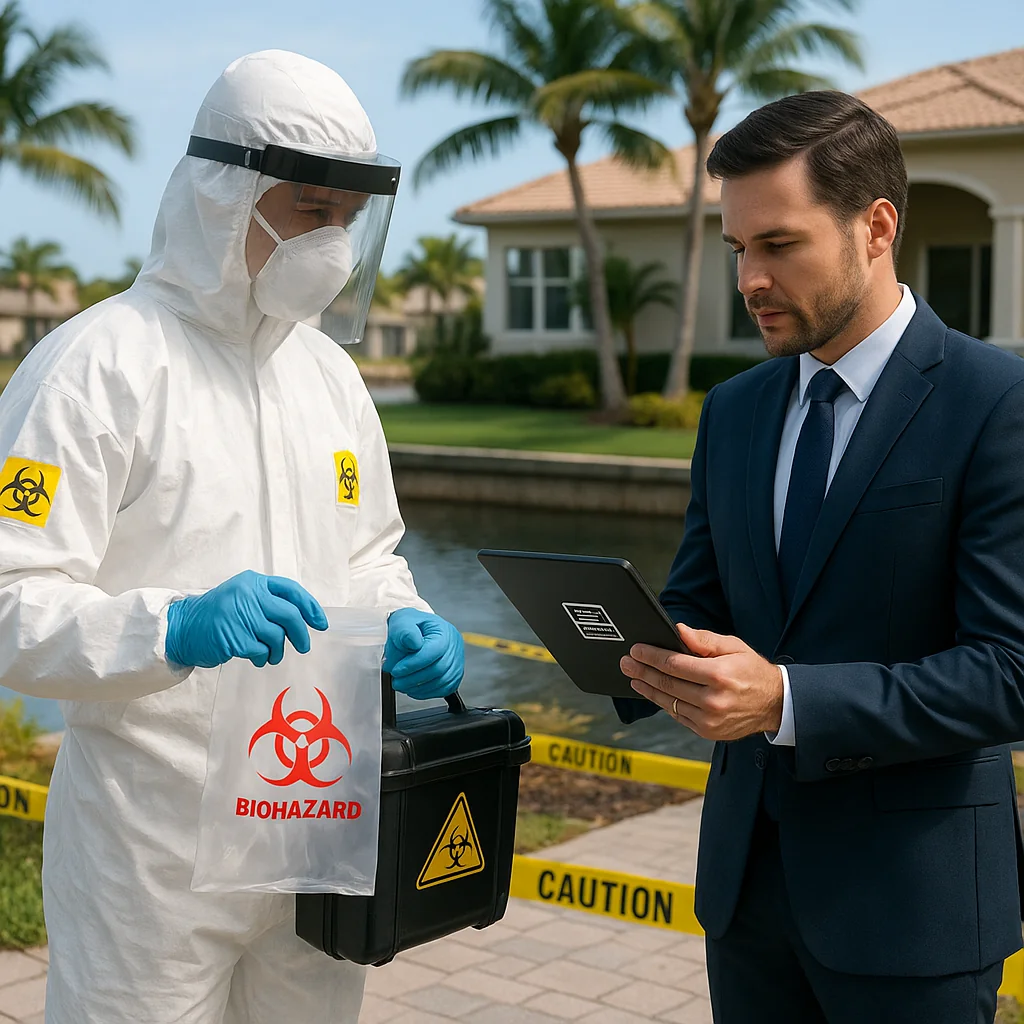
In Cape Coral, most standard homeowners insurance policies cover biohazard cleanup costs if the incident stems from a covered peril like an unattended death, accident, or sudden illness in your home. Coverage typically ranges from $5,000 to $25,000 per incident under personal liability or additional living expenses, but Florida’s humid climate and hurricane risks can complicate claims if water damage blurs lines with mold. Expect to pay a deductible first, usually $1,000-$2,500, and always document everything before touching the scene.
For Cape Coral homeowners, especially in older concrete block houses along the canals, understanding insurance for biohazard cleanup prevents financial shock after tragedies like a family member’s unattended passing or a slip-and-fall accident. I’ve walked into dozens of these scenes over the years, and the difference between a smooth claim and out-of-pocket nightmare often boils down to knowing your policy details upfront.
Common Biohazards That Trigger Insurance Coverage
Biohazard cleanups arise from blood, bodily fluids, or infectious materials that pose health risks. In Cape Coral, insurance steps in for sudden and accidental events, not neglect or pests. Here’s what typically qualifies:
- Unattended deaths: Common in snowbird homes left empty during summer heat; decomposition accelerates in our 90°F humidity, leading to claims under dwelling coverage.
- Accidents or injuries: Blood from falls in tile-floored kitchens or bathrooms—covered if not intentional.
- Suicide or homicide scenes: Policies cover suicide cleanup as accidental death, though exclusions apply for criminal acts sometimes.
- Infectious disease outbreaks: Like norovirus in multi-gen homes, if it results in contamination requiring EPA-compliant disposal.
Rodent droppings or sewage backups from canal flooding? Those often fall under separate riders or aren’t covered if preventable.
Warning Signs Your Cleanup Qualifies for Coverage
Spot these early to strengthen your claim. In Cape Coral’s canal-heavy neighborhoods like Four Mile Cove, water proximity amps up risks:
| Sign | Severity | Likely Covered? |
|---|---|---|
| Foul odor penetrating walls | High (decomp fluids) | Yes, if sudden death |
| Blood stains on floors/carpet | Medium | Yes, accident-related |
| Visible bodily fluids | High | Yes, most policies |
| Mold growth post-incident | Variable | Maybe, if tied to biohazard |
| Pest infestation from remains | Low-Medium | No, unless rider added |
If you see pooling liquids or hear buzzing flies through cracked windows—hallmarks in our warm weather—don’t DIY; it voids claims.
What to Do Immediately After a Biohazard Incident
First 24 hours are critical for coverage. Here’s the pro sequence I’ve followed on hundreds of Cape Coral jobs:
- Secure the area: Cordon off with tape; notify police if undiscovered death.
- Document: Photos/videos from multiple angles, no cleanup yet—insurers need proof.
- Call your agent: Get policy number, confirm coverage; ask for adjuster dispatch.
- Ventilate safely: Open windows if no airborne risk, but avoid fans spreading contaminants.
- Contact pros: We coordinate with insurers for direct billing.
DIY wiping blood? Fine for tiny spots under 1 sq ft, but anything larger risks cross-contamination and claim denial in Florida’s strict regs.
How Professionals Handle Insurance for Biohazard Cleanup
On-site, we start with a full assessment: ATP swabbing for invisible bio-load, moisture meters for hidden saturation—crucial in Cape Coral’s slab foundations where fluids wick under tile. Then:
- HEPA-vacuum airborne particles.
- Enzymatic breakdown of proteins (blood doesn’t bleach away).
- Seal/rip out porous materials like drywall soaked in our humid air.
- Decon certification for insurer sign-off.
We file paperwork, including OSHA-compliant logs, and bill insurers directly—saving you the $10K+ average cost. For crime scene cleanup in NE Cape Coral, we’ve seen claims approved in 48 hours with our reports.
Cape Coral Factors Influencing Coverage
Our coastal spot means unique twists. Hurricane season floods mix sewage with biohazards, pushing claims into flood policies (NFIP rarely covers cleanup). Older 1970s homes in Central Cape Coral have asbestos in popcorn ceilings—disturbed during decon, requiring extra riders. Summer monsoons breed bacteria fast; insurers scrutinize if you delayed reporting. Snowbird returns often uncover winter decomp—covered, but prove vacancy wasn’t neglect.
Table for local perils:
| Local Factor | Coverage Impact |
|---|---|
| Hurricane flooding | Separate flood policy needed |
| High humidity/decomp | Faster spread, higher costs—covered if prompt |
| Canals/sewage backup | Sewer endorsement required |
| Older homes | Hazardous materials add fees |
Prevention to Minimize Future Claims
Check on elderly neighbors weekly during 100°F summers. Install grab bars in wet bathrooms—slips are our top claim source. Add biohazard riders for $100-200/year if high-risk. Seal canal-side cracks to block rodents. Regular AC maintenance fights indoor mold that mimics biohazards.
Small steps like these have kept many Cape Coral families claim-free.
When to Call a Pro in Cape Coral
If the scene exceeds a single room, involves odors through vents, or you’re filing insurance—call Cape Coral Biohazard Pros at (239) 327-0029. We’ve navigated local adjusters and FL regs countless times, ensuring your coverage pays out without hassle.
Leave a Reply