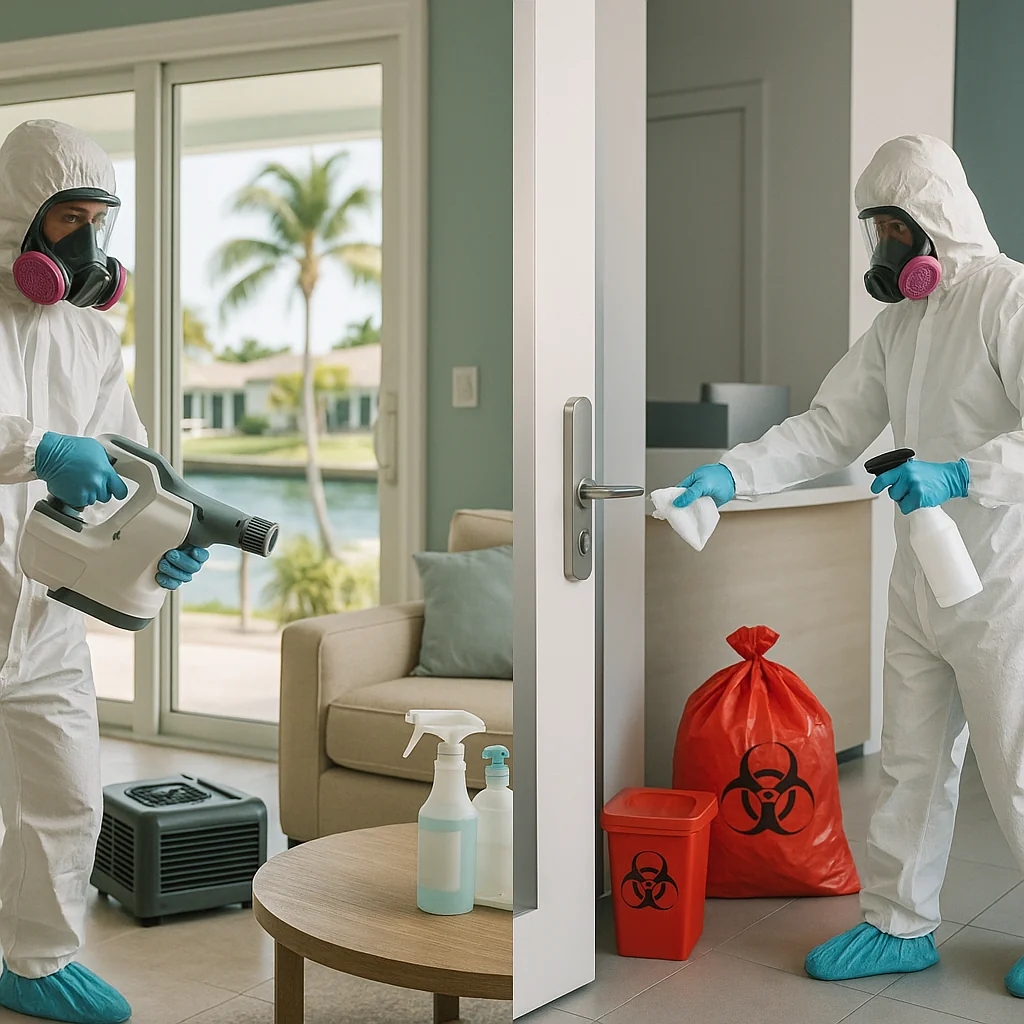
In Cape Coral, infectious disease cleanup in homes and businesses often stems from bodily fluids left after accidents, illnesses, or unattended deaths, requiring immediate containment to prevent spread in our humid subtropical climate. Professionals use EPA-approved disinfectants and follow OSHA protocols to eliminate pathogens like hepatitis B, HIV, and MRSA from surfaces, porous materials, and HVAC systems. For local homeowners, acting fast means securing the area and calling certified experts to avoid health risks amplified by our canal-side moisture.
Cape Coral’s mix of older concrete-block homes and waterfront businesses makes infectious disease contamination a hidden threat—our year-round warmth fosters bacterial growth, and seasonal floods from hurricanes can spread contaminants further into walls and crawlspaces.
Common Causes of Infectious Disease Contamination
I’ve handled hundreds of calls here where infectious materials end up in unexpected places. Bodily fluids from severe flu outbreaks, norovirus incidents in multi-family rentals, or worse—unattended deaths—carry high-risk pathogens. In Cape Coral, our dense housing near canals means sewage backups during heavy rains mix with vomit or blood, creating aerosolized hazards.
Needle sticks from homeless encampments near NE Cape Coral parks show up in backyards, and businesses like restaurants face employee illnesses spreading via shared restrooms. Trauma from assaults or suicides leaves bloodborne pathogens; for instance, a single unattended death can release gallons of fluids soaking into tile grout over days in our 80-90°F heat.
Key Sources in Homes
- Sick relatives isolating in bathrooms, leaving contaminated linens.
- Pets carrying leptospirosis from canal water contaminating floors.
- Aging in place leading to falls with blood splatter on carpets.
Business-Specific Risks
- Office coughs turning into MRSA clusters on doorknobs.
- Hotel rooms with guest vomit after heavy tourist nights.
- Construction sites with worker injuries near Central Cape Coral.
Warning Signs You Can’t Ignore
Fresh blood pools are obvious, but dried stains turning black in humidity signal ongoing bacterial colonies. Unexplained foul odors from walls—think sweet-rotten smell—indicate fluid migration behind drywall, common in our slab-on-grade homes. Watch for discoloration on grout, warped baseboards, or HVAC blowing musty air with visible residue.
| Sign | Severity Level | Action Needed |
|---|---|---|
| Fresh fluids | High | Evacuate, seal |
| Dried stains + odor | Medium-High | Contain, ventilate |
| Residue on vents | Medium | HEPA filter check |
| No visible but illness cluster | Low-Medium | Test surfaces |
In businesses, employee complaints of nausea post-shift point to airborne pathogens from uncleaned restrooms.
What to Do Right Now
First, no touching—use gloves if you must move items, but don’t. Close doors, block vents with plastic sheeting and tape; our humidity makes drying impossible without dehus. Turn off AC to avoid recirculation, open windows if safe, and keep people out. Mark the area with caution tape.
- Call 911 if active emergency.
- Document with photos for insurance, from a distance.
- Wash exposed skin with soap 15 minutes; change clothes.
- Avoid bleach initially—it can fix volatiles in blood.
DIY small spots like a single vomit pile with 10% bleach after 10-minute dwell if no blood, but porous surfaces need pros.
How Professionals Handle It
We suit up in full Tyvek, respirators with P100 filters, and double gloves. Assessment: ATP swabbing tests surfaces for organic load—over 500 RLU means deep clean needed. Removal: Cut out contaminated drywall sections (usually 2×4 feet around spill), bag in red biohazard liners, double-seal.
Disinfection: Three-step—mechanical wipe, EPA List B chemical like bleach or accelerated hydrogen peroxide (dwell 10 mins), then fogging for HVAC. Porous items like mattresses go to landfill; hard surfaces get HEPA-vacuumed. Air scrubbers run 24-48 hours post-clean, verifying with post-ATP under 20 RLU. Decomp takes 4-8 hours for a room, longer for attics.
For crime scene cleanup overlaps, we handle bloodborne alongside infectious protocols.
Cape Coral’s Unique Challenges
Our 90% humidity lets bacteria double every 20 minutes in fluids, vs. drier climates. Canal proximity means brackish water seeps under slabs during king tides, carrying vibrio from dead fish into homes. Older 1970s ranch-style houses have unsealed crawlspaces where fluids wick up 10-15 feet.
Hurricane season spreads contaminants via wind-driven rain into vents; post-Irma, we saw mold-biohazard hybrids in Four Mile Cove Area. Tourist influx spikes norovirus in condos—winter peaks hit 30% higher calls. Businesses near bridges face vagrant-related needles, thriving in shade.
Soil’s sandy base drains fast but retains salts, corroding cleanup tools faster here.
Prevention Tips for Long-Term Safety
Seal cracks in slabs with silicone caulk; install sump pumps in low canal yards. Businesses: Touchless fixtures, daily restroom ATP tests. Homes: HEPA vacuums, flu shot drives. Train staff on spill kits—absorbent pads, then disinfect.
Annual HVAC filter changes prevent recirculation; in our climate, use antimicrobial-coated ones. For high-risk like elderly care, stock 1:10 bleach and PPE.
Secure yards against canal critters carrying leptospirosis—fence gaps invite rodents.
When to Call a Pro in Cape Coral
Skip DIY if blood, multiple surfaces, odors linger, or post-trauma like suicide cleanup. Pros ensure compliance with Florida DOH regs, avoiding fines. For peace of mind, Cape Coral Biohazard Pros at (239) 327-0029 responds 24/7— we’ve seen too many re-contaminations from partial cleans.
Leave a Reply