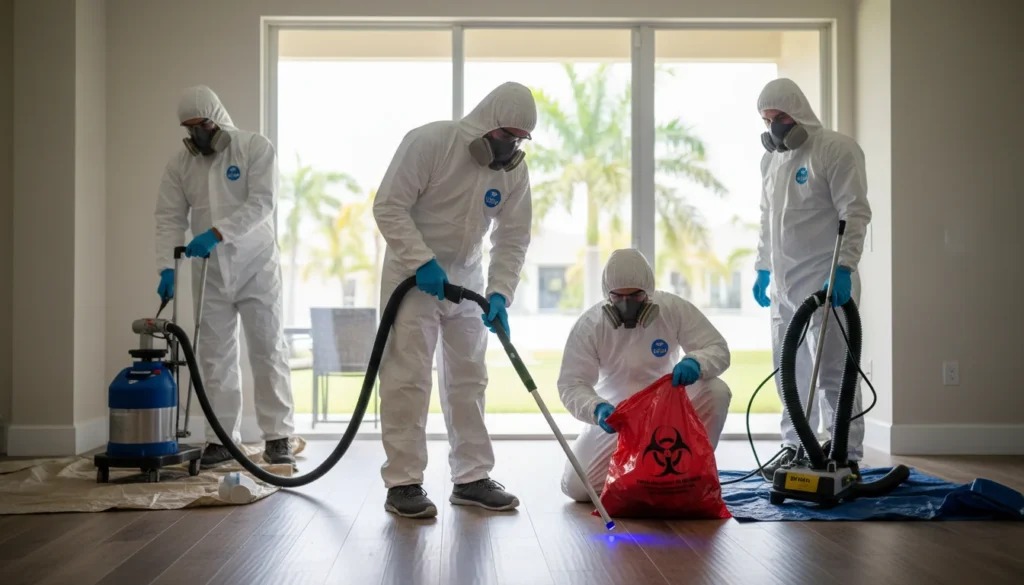
If you find signs of an unattended death in your Cape Coral home, step back immediately, secure the area to prevent anyone else from entering, and call authorities followed by certified biohazard cleanup experts. In our humid Southwest Florida climate, decomposition accelerates fast, releasing dangerous fluids and pathogens within hours, so touching anything risks severe health hazards like hepatitis or bacterial infections. Contact Cape Coral Biohazard Pros at (239) 327-0029 right after police release the scene—don’t attempt cleanup yourself.
Unattended deaths hit Cape Coral homeowners hard, especially in our older canal-front homes where neighbors might not notice for days amid the constant hum of AC units and waterfront breezes masking odors. I’ve cleaned hundreds of these scenes over 15 years here, from Bimini Drive condos to Yacht Club bungalows, and the key is acting fast to avoid structural damage from corrosive decomposition fluids that eat through drywall and flooring in our salty air.
Common Causes in Cape Coral Homes
Unattended deaths often stem from natural causes like heart attacks in seniors—common with our snowbird population returning post-season—or overdoses in rentals near Pine Island Road. Suicides account for about 30% in my experience, frequently in bathrooms or garages where suicide cleanup requires special bloodborne pathogen protocols. Falls in multi-story homes along Del Prado, medical emergencies during hurricane evacuations, or homeless individuals seeking shelter in vacant properties during summer rains also lead to discoveries weeks later.
Our aging housing stock, with many 1970s builds on slabs prone to settling, hides bodies longer under furniture or in closets, complicating recovery.
Warning Signs to Spot Early
The smell hits first—a sickly sweet rot that cuts through even our coastal winds—but in sealed AC homes, it builds inside ducts. Look for:
- Discolored walls or ceilings from leaking fluids, often brownish stains migrating downward.
- Clusters of flies or maggots around doors, windows, or vents, peaking in our 90°F summers.
- Puddles of dark, viscous liquid under furniture or seeping from under doors.
- Sudden spike in AC strain or mold growth from humidity trapped with the gases.
In Cape Coral’s canal neighborhoods, watch water levels too—high tides can push odors from crawlspaces. A table below matches signs to severity:
| Sign | Severity | Time Since Death (Est. in FL Heat) |
|---|---|---|
| Faint odor, no visible fluid | Low | 1-3 days |
| Flies, wall stains | Medium | 3-7 days |
| Liquefied remains, structural damage | High | 7+ days |
Immediate Steps After Discovery
- Evacuate and secure: Leave the home, lock doors, post “Do Not Enter” signs. Alert neighbors quietly to avoid panic.
- Call 911: Report without entering—let first responders handle confirmation.
- Ventilate safely: From outside, crack windows if safe, but avoid fans spreading contaminants.
- Notify next of kin and landlord: If renting, check lease for biohazard clauses common in our flood-prone area.
- Document for insurance: Photos from afar help claims, as Florida policies often cover unattended death remediation up to $10K.
DIY odor masking with bleach? Skip it—harms evidence and health. In our wet climate, it traps moisture leading to black mold.
How Pros Handle Unattended Death Cleanup
We arrive in full PPE: Tyvek suits, respirators, double gloves—OSHA Level C minimum. First, source containment with plastic sheeting sealed by negative air machines pulling contaminants out via HEPA filters. Removal uses biohazard bags for remains and absorbent pads for the 10-20 gallons of fluid a body can purge in week two.
Disinfection hits with EPA-registered hospital-grade solutions like bleach (1:10) or peroxides, applied after gross removal. Enzymes break down proteins causing odors, unlike store-bought sprays. For odor removal, we fog ozone or hydroxyl generators post-clean, targeting HVAC systems clogged in our dusty trade winds.
Structural fixes: Cut out porous drywall (always to studs), subfloor sanding if tile lifts from adhesives softened by acids. Testing air quality pre/post ensures safe re-entry, vital before our rainy season.
Cape Coral-Specific Cleanup Challenges
Humidity over 80% year-round speeds purge fluids, corroding aluminum wiring in older Central Cape Coral homes faster than inland. Canal proximity means groundwater contamination risks— we pump sump pits and test soil pH shifts from alkaline body fluids. Hurricane season leaves power out, delaying discoveries in properties near Yacht Club Area, where brackish water mixes with decomp runoff.
HOA rules in golf communities demand discreet ops, so we use enclosed vans. Summer heat waves purge bodies in 48 hours versus cooler months, overwhelming standard vacs—we bring industrial units hauling 100 gallons/hour.
Prevention Tips for Cape Coral Homeowners
Install medical alert systems tied to canal-view windows where falls happen. Check on elderly neighbors during 100°F+ Julys or post-Ian rebuilds. Smart AC monitors flag temp spikes from uncirculated air. For rentals, quarterly welfare checks prevent hoarding cleanup crossovers, as clutter hides bodies longer here.
Carbon monoxide detectors in boat garages, and community watches via Nextdoor for isolated snowbirds returning October.
When to Call Cape Coral Biohazard Pros
Always for unattended deaths—DIY risks fines under Florida biohazard transport laws and health exposure. We’re 24/7 local, permitted for Lee County landfills, handling permits locals dread. Reach us at (239) 327-0029 post-police clearance for safe, thorough Biohazard Cleanup in Cape Coral. Your home stays livable, no lingering smells haunting holidays.
Leave a Reply