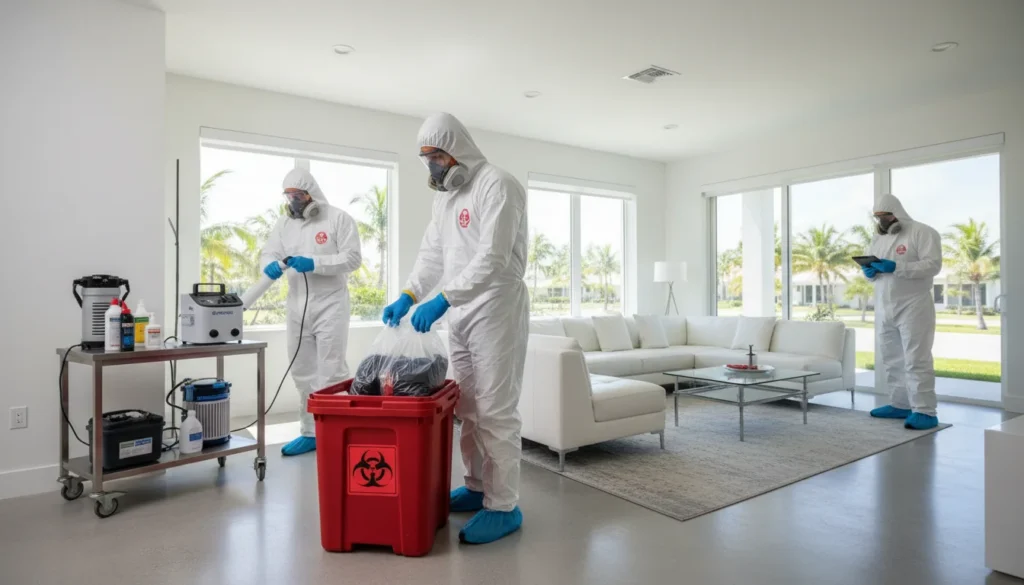
In Cape Coral, expert crime scene cleanup starts with securing the area to prevent exposure to bloodborne pathogens, followed by professional removal of all biohazardous materials using EPA-approved disinfectants suited for our humid climate. Homeowners should never attempt DIY cleanup due to risks like hepatitis transmission from even dried fluids. Calling certified pros like those at Cape Coral Biohazard Pros ensures safe, thorough decontamination that meets Florida health codes.
Crime scenes in our canal-lined city can turn a family home into a health hazard fast, especially with our year-round heat accelerating decomposition. I’ve handled these situations from Del Prado to Pine Island Road, and what matters most is acting right to protect your household and property value.
Common Causes of Crime Scenes in Cape Coral Homes
Most crime scenes we see stem from suicides, homicides, or accidents, often in older ranch-style homes built in the 70s and 80s that dominate Cape Coral neighborhoods. Suicides account for a big chunk—picture a garage or bathroom where a firearm discharge leaves splatter on concrete block walls that absorb fluids deeply. Homicides might involve stabbings in living rooms, with blood pooling on tile floors common in our slab-on-grade constructions.
Accidental deaths, like falls during medical episodes, happen frequently among retirees living along the canals. And don’t overlook overdoses in rental properties near NE Cape Coral, where response times stretch during tourist season. These aren’t rare; in a city with over 200,000 residents and steady influx from Southwest Florida transplants, they hit close to home.
Warning Signs You Can’t Ignore
Fresh blood is obvious—bright red pools or sprays up to 10 feet on walls—but watch for subtle cues too. A coppery metallic odor lingers even after airing out, stronger in our 90% humidity that slows evaporation. Discoloration on carpets turns them stiff and dark; on drywall, it bleeds through paint in rusty stains.
Look for insect activity: flies cluster on windowsills within hours, maggots appear in 24-48 hours in summer heat. In canal-adjacent homes like those in the Four Mile Cove area, water proximity draws more pests, worsening spread. Use this table to gauge urgency:
| Sign | Severity | Timeframe |
|---|---|---|
| Fresh blood pools | High | Immediate pro call |
| Persistent odor | Medium-High | Within 24 hours |
| Staining on porous surfaces | Medium | 48 hours max |
| Insect infestation | High | Pro ASAP |
What to Do Right Now If You Discover a Scene
First, exit the area—no touching anything. Call 911 if not already done, then keep everyone out, including pets; our dogs love sniffing around canalside patios but that exposes them to risks. Ventilate from outside only, using fans to push air out windows away from neighbors.
Document minimally with photos from the doorway for insurance, but skip close-ups. Avoid bleach or ammonia cleaners; they fix stains but don’t kill pathogens like HIV or hepatitis B, which survive weeks in Florida’s warmth. Seal off with tape and signs. If it’s a suicide cleanup, emotional weight hits hard—step back and let pros handle the rest.
- Secure the scene: Lock doors, post warnings.
- Notify authorities and next of kin.
- Contact biohazard pros immediately—don’t wait for landlord approval in rentals.
How Professionals Handle Biohazard Cleanup in Cape Coral
We arrive in full PPE: Tyvek suits, respirators, double gloves rated for sharps. Assessment takes 15-30 minutes: ATP swabbing tests contamination levels, UV lights reveal hidden fluids. Removal uses 10:1 water-bleach for non-porous, enzyme cleaners for organics, then HEPA vacs for residues.
Porous items like mattresses go to hazardous waste—incineration per EPA rules. Walls get sanded if penetrated; floors power-washed with hospital-grade quaternary ammonium. In Cape Coral’s salt-air environment, we apply antimicrobial sealants to prevent mold regrowth. Final clearance sampling confirms under 10 CFU per square inch bacteria. Full job: 8-24 hours depending on size, with odor neutralization via ozone generators tailored for our enclosed lanai spaces.
For complex cases like crime scene cleanup involving multiple rooms, we coordinate with forensics first, then restore to livable condition.
Cape Coral’s Unique Challenges in Crime Scene Cleanup
Our subtropical climate—95°F summers, 80% humidity—speeds decomposition: bodies reach purge fluids in 2-3 days versus a week up north. Canals mean high water tables; basements aren’t common but slab moisture wicks contaminants into grout. Hurricane season floods exacerbate, mixing sewage with blood in low-lying areas.
Older homes have asbestos in popcorn ceilings disturbed during demo, requiring abatement. Concrete blocks in mid-century builds soak up fluids 2-3 inches deep, needing core drilling for full removal. Tourist rentals near beaches see more transient scenes, with quick turnovers pressuring fast cleans to avoid vacancy losses.
Sewage backup cleanup often overlaps if plumbing fails post-storm, compounding biohazards.
Prevention Tips for Cape Coral Homeowners
Install bathroom grab bars—falls spike in slick tile showers. Secure firearms in safes; check on elderly neighbors during isolation periods. Motion-sensor lights deter break-ins along unlit canal paths. Maintain sump pumps for rainy season to avoid water intrusion mimicking scenes.
Annual home inspections catch porous material wear. For rentals, screen tenants thoroughly. Emotionally, community resources like Lee Health crisis lines help prevent suicides. These steps reduce risks without turning your home into a pro’s job site.
When to Call a Pro in Cape Coral
Any visible blood, unexplained odors, or post-incident residue means call pros now—DIY only risks family health and fines up to $5,000 under Florida statutes for improper disposal. Cape Coral Biohazard Pros handles (239) 327-0029 for 24/7 response across the city. We’ve restored hundreds of local homes safely; your safety comes first.
Leave a Reply