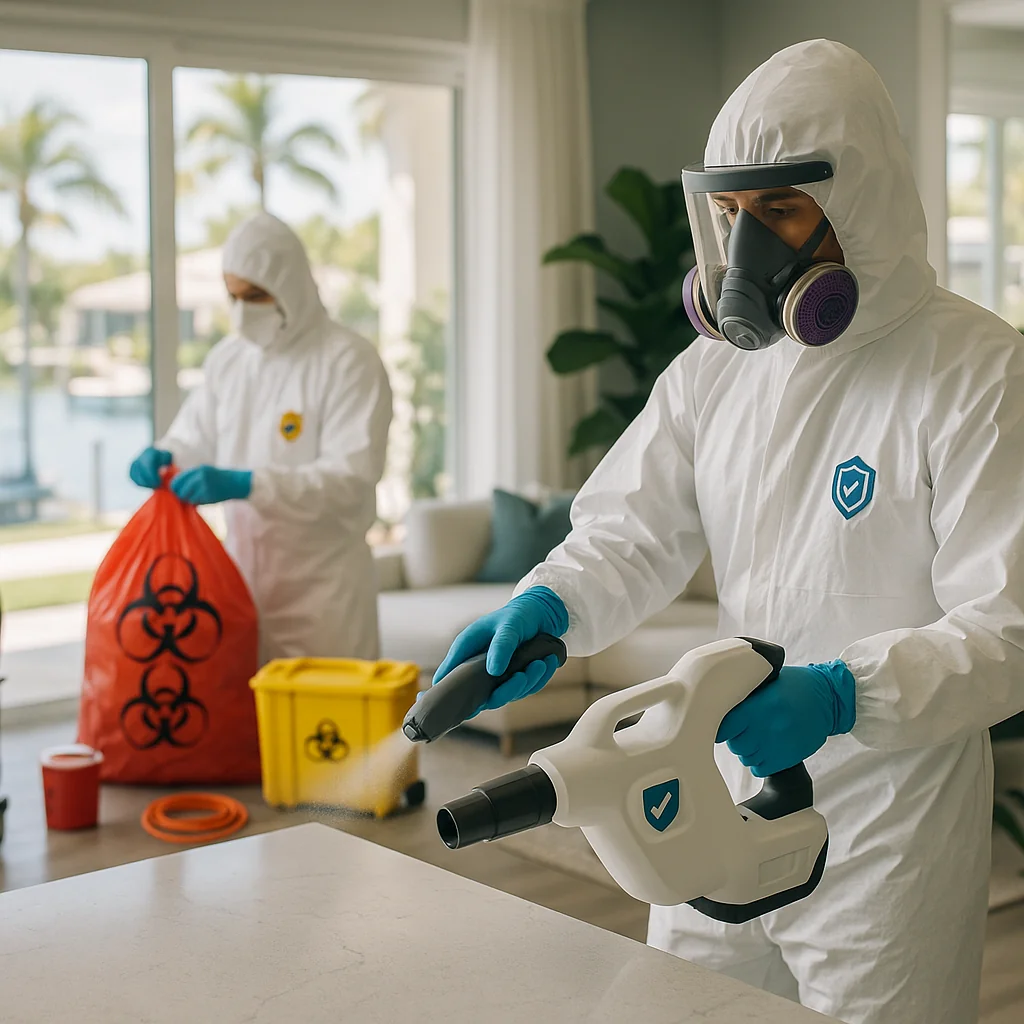
In Cape Coral, hiring certified biohazard cleaners tops the list when dealing with blood, bodily fluids, or infectious materials from incidents like unattended deaths or accidents. Our humid climate and canal-lined neighborhoods amplify risks, turning small spills into moldy, bacteria-ridden nightmares if not handled right. Certified pros ensure safety, regulatory compliance, and complete restoration without spreading contaminants.
Local homeowners face these issues more often than you’d think—think older ranch-style homes near the waterways where flooding mixes with biohazards during hurricane season. I’ve cleaned up dozens in areas like Four Mile Cove, where high water tables make porous concrete slabs soak up fluids fast. Skipping certification means risking your health and fines from Lee County health codes.
Common Causes of Biohazard Scenes in Cape Coral Homes
Cape Coral’s mix of retirees, boating crowds, and seasonal swells brings unique triggers. Unattended deaths hit hard here; folks living alone in those mid-century homes off Del Prado might go undiscovered for days in the summer heat. Fluids seep into drywall and flooring, fueled by 90% humidity that breeds bacteria overnight.
Accidents from slips on wet docks or kitchen falls leave blood pools. Medical waste piles up in homes with hospice care—needles, soiled linens. Then there are the violent ones: crime scenes or suicides, often in quiet NE Cape Coral subdivisions where neighbors don’t notice right away.
Hurricane aftermath worsens it. After Ian, we saw storm debris mixed with sewage backups, creating hybrid hazards. Canals overflow, rodents invade, and voila—Hantavirus potential from droppings in flooded garages.
Warning Signs That Scream for Professional Help
Don’t wait for the stench; early signs save your structure. Sweet, coppery odors hit first from decomposing blood—familiar from countless jobs in waterfront bungalows. Discoloration on carpets or grout lines, especially beige tiles common in 1970s builds, shows fluid migration.
Visible mold patches within 48 hours signal trouble; our subtropical air turns bio-matter fungal fast. Swarms of flies or maggots in vents? That’s decomposition gases drawing them. Health flags like persistent nausea or rashes mean airborne pathogens—I’ve seen families hospitalized after DIY attempts.
| Sign | Severity | Action |
|---|---|---|
| Faint odor, minor stains | Low | Call pros for containment |
| Heavy stench, visible pests | Medium | Evacuate, ventilate, pro cleanup |
| Mold growth, illness | High | Immediate certified team |
What to Do Right Now: Safe First Steps
DIY some prep, but know limits. First, evacuate everyone—kids and pets especially, given Cape Coral’s allergy-heavy pollen mixing with bio-aerosols. Ventilate by opening windows, but avoid fans that aerosolize particles.
Wear gloves, N95 masks, and eye protection if containing small spills under a square foot. Absorb with paper towels into biohazard bags, double-bagged. Bleach? Skip it—wrong for bloodborne pathogens; it can react badly with organics.
Bigger? Stop. Lee County’s OSHA-aligned rules demand certification for anything beyond minor first aid. I’ve arrived to homes where well-meaning relatives smeared fluids further, turning a 4-hour job into days.
- Secure the area with tape and signs.
- Document with photos for insurance.
- Call certified cleaners like those at Four Mile Cove specialists.
How Certified Pros Handle Biohazard Cleanup in Cape Coral
We start with a site assessment: ATP meters test surface contamination levels—anything over 500 RLU means full decon. PPE is Level C: respirators, Tyvek suits, booties to track zero contaminants.
Removal uses HEPA vacuums and enzymatic digesters that break down proteins at a molecular level—no residues for odor removal later. Porous materials like drywall go if saturated over 10%; we cut sections, bag, and dispose via licensed medical waste haulers.
Disinfection follows EPA-registered hospital-grade solutions, dwell time 10 minutes, verified by swab tests. Final air scrubbers with UV pull pathogens from HVAC. In Cape Coral, we check for salt water corrosion post-flood—common in slab homes.
- Containment with plastic sheeting and negative air machines.
- Gross removal of solids.
- Structural decon and rebuild.
- Certification of clean with post-testing.
Time? Minor job: 4-6 hours. Full house: 2-3 days. Costs run $1,500-$5,000 depending on square footage—insurance covers most.
Cape Coral’s Climate and Housing Demand Certification
Our 85-degree averages and brackish canals make biohazards explode. Fluids wick up 18 inches into stucco walls, unseen. Hurricane season (June-November) floods basements—rare but devastating in low-lying spots like NE Cape Coral.
Older inventory (60% pre-2000) has asbestos in tiles, lead paint—mixing with blood creates multi-hazard sites needing IICRC-certified techs. Soil? Sandy, drains fast but retains moisture in clay pockets, prolonging decay. Certification ensures we handle hep C, HIV, MRSA per CDC protocols, plus Florida DEP waste rules.
Amateurs miss HVAC contamination—ducts in attics harbor dried fluids, recirculating for months. Pros fog entire systems.
Prevention Tips Tailored to Local Homes
Install water alarms in garages; canals back up silently. GFCIs everywhere—electrocutions spike in rainy months. For seniors, medical alert buttons cut unattended death risks.
Seal cracks in slabs; termites and palmetto bugs carry pathogens. Stock a bio-spill kit: absorbents, bags, but train family—no heroics. Annual HVAC filter swaps prevent mold amplification.
Wellness checks on isolated neighbors; community watches in Bimini Basin have prevented discoveries.
When to Call Cape Coral Biohazard Pros
Any fluid volume over a cup, unknown sources, or odors persisting post-clean means pros. We’re equipped for Cape Coral’s quirks—24/7 response to beat the humidity clock. Reach us at (239) 327-0029 for certified Biohazard Cleanup in Cape Coral; we’ve restored hundreds of homes safely.
Leave a Reply