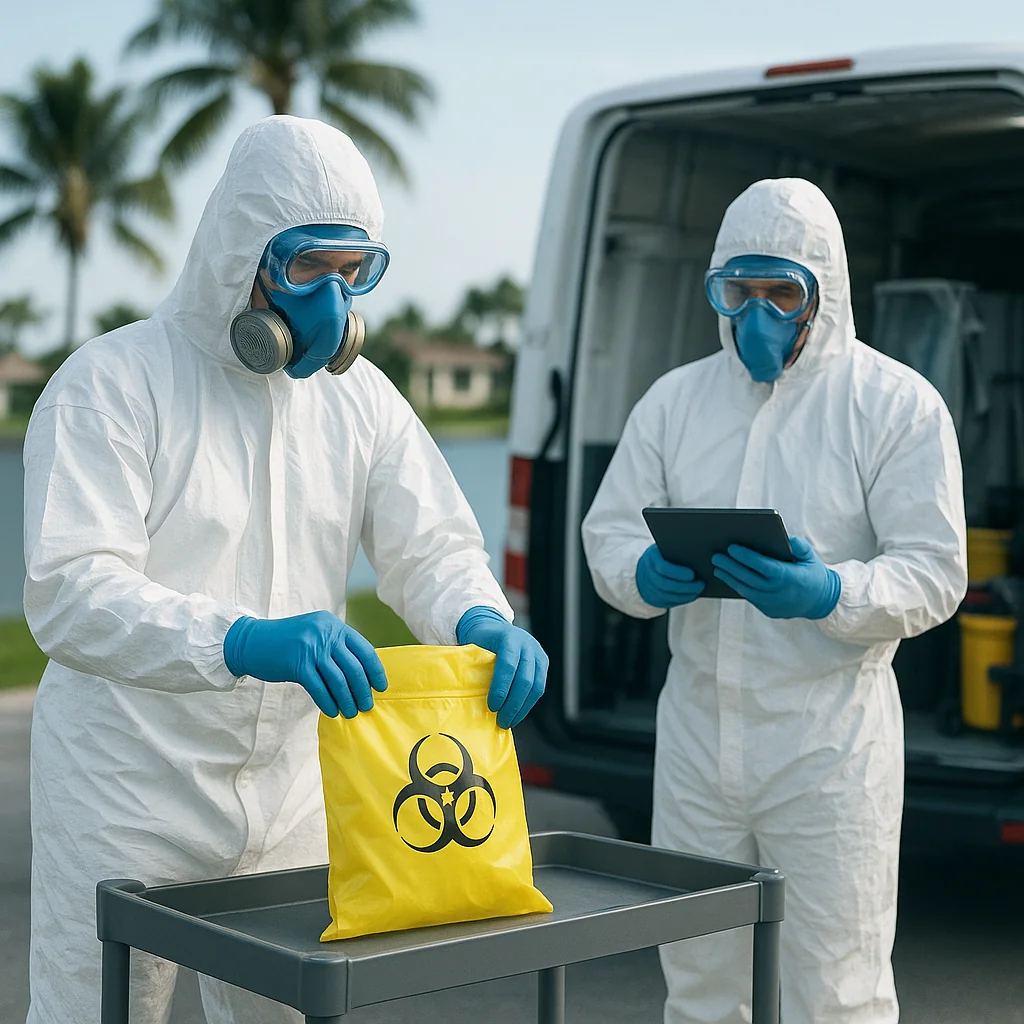
When picking a biohazard cleanup company in Cape Coral, prioritize IICRC certification, OSHA compliance, 24/7 availability, and proven local experience with our humid climate and hurricane-prone canals. Companies that skip proper PPE or use subpar containment risk spreading contaminants like bloodborne pathogens into your waterways. Look for those who document every step and provide certificates of completion to avoid health department headaches down the line.
Here in Cape Coral, biohazards hit hard because of our aging canal homes and seasonal floods—one unattended sewage backup can turn into a mold factory overnight in this humidity. Homeowners often call us after realizing a DIY wipe-up just smeared bacteria further, especially post-hurricane when debris mixes with bodily fluids. Getting the right team means restoring safety without secondary damage to your property’s value.
Certifications and Licensing: Non-Negotiables for Safety
I’ve walked into scenes where unlicensed crews left residue that grew into health hazards months later. Start with IICRC certification for trauma scene management—it means they’ve trained on bloodborne pathogens and proper disposal. OSHA 29 CFR 1910.1030 compliance is key; ask if they carry bloodborne pathogen training cards on every tech.
In Florida, biohazard waste handlers need DEP permits for transport. Cape Coral’s proximity to the Caloosahatchee River means improper disposal contaminates shellfish beds—we’ve seen fines hit $10,000 for violations. Verify state contractor licenses via myfloridalicense.com; no license, walk away.
- IICRC Trauma & Crime Scene: Handles decomposition and sharps safely.
- OSHA Bloodborne Pathogens: Ensures PPE like Tyvek suits and respirators.
- DEP Biohazard Transport: Legal red bag sealing and incineration logs.
Local Experience: Why Cape Coral Know-How Beats National Chains
National outfits fly blind on our canal systems—a sewage backup cleanup in a mid-century ranch near Del Prado requires decontaminating brackish water infiltration that outsiders miss. We’ve handled hundreds post-Irma, where salt air corrodes standard equipment fast. Local crews understand 1960s concrete block homes absorb fluids deeply, needing enzyme treatments over bleach.
Check if they’ve worked in NE Cape Coral, where older slabs crack under flood pressure, trapping pathogens. Ask for case studies: did they manage a hoarding situation with pest-infested bio-waste? Real pros share anonymized photos of before/after without breaching privacy.
Red Flags in Local Claims
| Claim | Verify By | Risk if False |
|---|---|---|
| “We serve all of SWFL” | Ask for Cape Coral addresses | Delayed response in bridge traffic |
| “Hurricane-ready” | Proof of post-Ian jobs | Equipment fails in 90% humidity |
| “Eco-friendly” | DEP manifests | Clogs in our stormwater drains |
Response Time and 24/7 Availability in Our Weather
Cape Coral’s drawbridges and seasonal tourists mean a 30-minute ETA can stretch to two hours—critical when decomposition odors seep into HVAC in our heat. Pros staff locally with multiple units; we’ve rolled out to suicide cleanup calls at 3 AM during red tide peaks, containing scenes before neighbors complain.
Test them: call off-hours and note if they dispatch within 60 minutes. Post-hurricane, FEMA protocols prioritize certified locals—insurance reimburses faster too.
Equipment and On-Site Protocols: What Pros Bring
Amateurs use shop vacs; we deploy HEPA vacuums with 99.97% filtration, pulling microbes from carpet fibers. Ozone generators follow for odor removal, but only after ATP swabbing confirms no proteins left—our meters hit under 10 RLU for clearance.
Steps we follow: secure perimeter with decon tents, double-bag sharps in rigid containers, neutralize with EPA-registered disinfectants like AHP. In hoarding cases, we’ve sorted 50 tons, using negative air scrubbers to prevent aerosol spread in tight bungalows.
- Scene assessment: UV lights reveal fluids invisible to the eye.
- Containment: 6-mil poly sheeting seals rooms.
- Gross removal: Scrapers and biosorbents, never hosed.
- Disinfection: 10-minute contact time, rinsed.
- Verification: Post-swabs and air sampling.
Cape Coral’s Unique Challenges: Humidity, Floods, and Canals
Our 80-90% humidity lets bacteria double every 20 minutes post-spill—unlike drier areas, we hit scenes with decomp fluids already molding. Hurricane season floods canals, mixing sewage with trauma waste; we’ve pumped out 1,000-gallon backups from 1970s pumps failing under surge.
Soil here is sandy, so groundwater pulls contaminants fast—pros test pH to avoid corrosion in rebar homes. Winter dry spells crack slabs, exposing old blood from animal deaths locals ignore.
Insurance, Reviews, and Prevention Basics
Demand $1M general liability and workers’ comp—covers if a tech slips on your scene. Skip cash-only ops; bonded firms replace damaged drywall without liens.
Google reviews from Cape Coral ZIPs beat Yelp stars—look for mentions of DEP compliance. Prevention: seal cracks yearly, elevate HVAC intakes, stock PPE kits for minor spills. But blood or feces? Never DIY—hepatitis lingers.
Call a pro when bodily fluids exceed a cup, odors persist 48 hours, or health symptoms appear. In Cape Coral, hoarding cleanup with biohazards or unexplained deaths demand immediate experts. Cape Coral Biohazard Pros handles these reliably; reach us at (239) 327-0029 for fast, safe restoration.
Leave a Reply